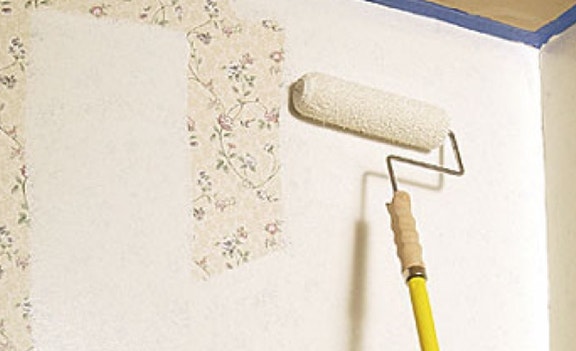
How to paint on wallpaper
If your wallpaper is in good condition, without peeling areas and holes, try painting over it instead of replacing it, for a fresh new look.
For Best Results:
If your wallpaper is textured, the texture may be visible even after the wall is painted. To avoid this, it is best to remove the wallpaper from the wall.
Water-based paints and primer may reactivate the wallpaper glue resulting in unwanted peeling. To avoid, prime wallpaper with an oil-based primer to seal the surface.
Tools & supplies
- Brush (2"-2-1/2")
- Bucket
- Bucket Grid
- Extension Pole
- Vinyl Gloves
- Ladder
- Paint Can Opener
- Paint Tray
- Paint Tray Liner
- Rags
- Roller Cover and Frame
- Stir Stick
Step-by-step process
Step 1
Secure loose seams with wallpaper paste so they lie flat. Remove any residue, dirt or grime from the wallpaper. Even out wallpaper seams by applying drywall mud to the seams, allowing to dry and sanding smooth. Remove any dust from sanding with a damp cloth and allow the surface to dry completely.
Step 2
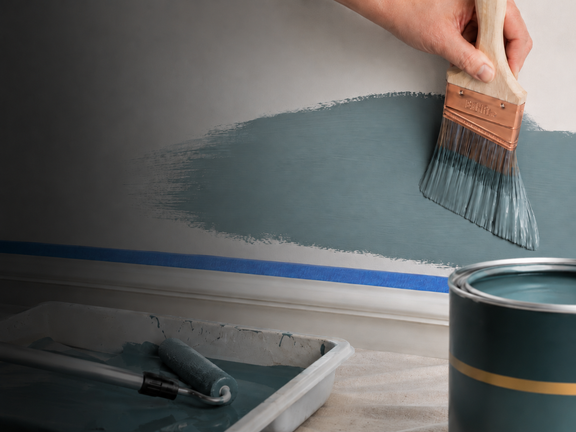
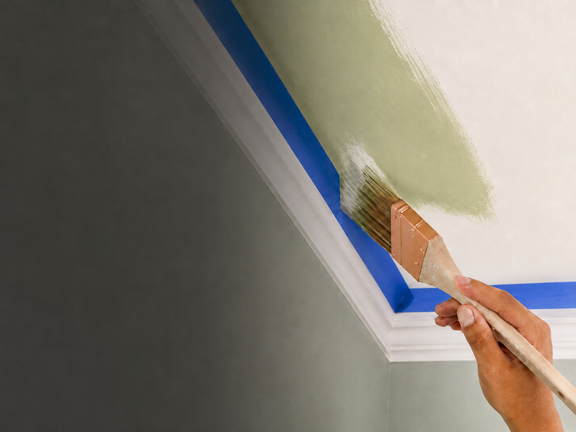
With your brush, paint (cut in) around the perimeter of the wallpapered surface. Start at a top corner and continue along the ceiling and around the baseboards.
Tip:
To avoid drips, tap off the paint against the inside wall of the bucket.
Step 3
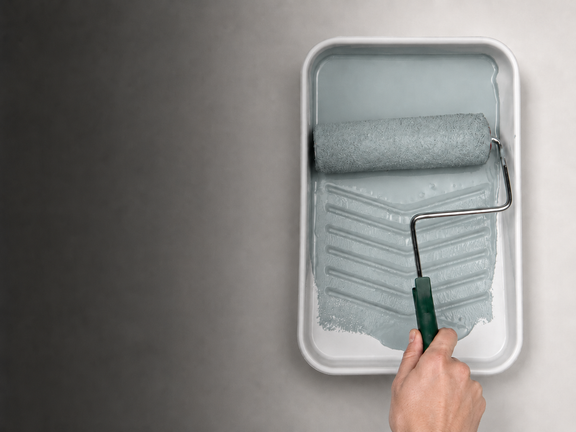
From the bucket, pour paint into a tray and work your roller into the tray until it is fully loaded with paint. For best results, use a 3/8" - 1/2" roller cover.
Tip:
For larger areas, consider using a 5-gallon bucket and a bucket grid.
Step 4
Starting in a 3' x 3' section at the top corner of the project area, roll the paint onto the wallpaper in a "W" formation.
Tip:
For an even application, begin 3" - 4" away from the cut in section.
Step 5
Work the roller back and forth across the section until the "W" is completely filled in. Be sure to roll over the cut in area as well.
Tip:
Reload the roller when necessary and maintain a wet edge.
Step 6
Forming a column from ceiling to floor, paint the next 3' x 3' section directly below the previous one.
Tip:
To blend the 3' x 3' sections and ensure a uniform finish, lightly pass the roller over the newly painted area.
Step 7
Repeat the process of forming columns and blending sections until the project is complete.
Tip:
For optimum results in quality of color and finish, apply a second coat.