Contact a Pro Rep
Products

Learn about Behr interior and exterior professional paint products including paint product features, usage, and how to apply to ensure a professional finish.

For homeowners, beautifully painted cabinets can be a great source of pride. For painting pros, they can showcase exceptional skill, product knowledge, and attention to detail. However, these projects are notoriously unforgiving, especially when steps are skipped or improper products are selected. Check out this list of pro tips to ensure you and your crew are prepped to do the job right.   Customer Prep All jobs start with excellent prep, and the first prep step is fully understanding the expectations, current conditions, and potential challenges. Start by finding out the level of finish that the customer expects.   “It depends on what the paying customer wants. You’ll choose different products depending on whether they want a factory finish or a basic repaint to spruce up the cabinets,” says Ed Edrosa, Senior Product Manager for Behr Paint.   Many contractors offer an array of products and finish levels, so the customer can choose an option that meets their needs and budget. If you only do high-end projects and are unwavering in your quality standards, create a strong qualifying process to identify the prospects who can afford your level of work.     Before giving an estimate, inspect for defects that could add additional prep work to the project. High levels of grease, dents/holes, mixed materials, and wood species that require grain filler are a few examples of things to look for. Prepare for sneaky challenges that often pop up once the project is in process. Many contractors recommend a clause in the contract that addresses how unforeseen challenges will be handled.   Job Site Prep A well-planned job site helps the job move along efficiently, ensures that everyone stays safe, and that everything in the home stays clean and damage-free.   Overspray: Since most cabinets will be sprayed, all surfaces not being sprayed should be properly covered to protect them from overspray. Ventilation/PPE: Properly train crew members and ensure use of appropriate PPE. Set up your site for proper ventilation and air filtration. Lighting: Good lighting is critical to ensure that nothing is missed during prep and you can quickly see any imperfections in the coating that need attention. Transportation: If you are taking drawers and doors off-site to a shop, don’t forget to wrap and secure them to protect the items from damage.   Surface Prep Grease and oil are common in kitchens, and they wreak havoc on paint. Begin with a good old-fashioned cleaning. Grease cutters like Dawn dish soap, TSP, and, in tough situations, denatured alcohol are good go-tos. Inspect and scrape the cabinets, and clean all their nooks and crannies.   Sanding strategy and primer choice are situational. Generally, a three-coat system with a scuff sand before each coat will give you a quality result. Follow these steps:   Sand Prime Sand Coat one Sand Coat two   Remove dust with a vacuum cleaner after sanding, and wipe all surfaces with a wet rag or tack cloth.   Choose a primer that is formulated for your specific situation. For instance, if you are painting enamel over previously painted cabinets, “our BEHR® Kitchen, Bath & Trim Stain-Blocking Primer & Sealer will do the trick,” says Edrosa. This primer blocks medium-to-heavy stains and is perfect for properly prepped glossy surfaces. However, if you are working on something like melamine cabinets, it’s better to use a bonding primer like BEHR Interior/Exterior Bonding Primer for its high-adhesion qualities. Paint “Not every paint can be used on cabinets,” warns Edrosa. Even once old grease is removed, the new coating needs to hold up to future grease. “The oils soften the paint film, so if you don’t use the right paint, you can end up with something that looks good, but you’ll get a callback in a few months because the paint is softening and accumulating dirt.” Cabinet paints are formulated with special resins designed to resist grease and prevent staining. While it is possible, it’s rare to see a successful cabinet job that doesn’t use spraying as its primary application method. “Technique plays a big part in a beautiful and lasting result,” says Edrosa.     Before spraying, always strain the paint to remove impurities that can clog the tip or spray debris with your topcoat. It’s best to apply two thinner coats as opposed to one thick coat.   Build a System It might seem impossible to create a system that handles the wide array of substrates, expectations, and challenges that come with painting cabinets, but if you establish standard operating procedures around what you see most and build flexibility into contracts for unknown unknowns, you can take a lot of stress out of the job.     Set your standard offers and price, and only take on those gnarly jobs when you are sure you are ready for them (and up-charging for them).   Cabinets, while more challenging than a lot of other repaint work, are popular and lucrative projects. It’s worth the time and effort to become known for your excellent cabinet work.   To learn more about Behr’s cabinet products, contact your local BEHR Pro Rep.  
Pro Tips for Painting Cabinets
Paint and primer in one formulas have long been a hot topic of conversation among pro painters. While fewer steps can benefit busy contractors, you should never compromise quality.   Ultimately, superior finishes require proper product selection and prep. “Using a primer is widely regarded as best practice in the professional painting world,” says Ed Edrosa, Senior Product Owner – Pro at Behr Paint Company.   While skipping important steps is not the right path to a professional finish, it’s worth knowing when to prime and when a paint and primer in one product can save time and produce a beautiful, flawless finish.     Paint with a Primer, vs Paint and Primer in one “Paint is a coating made to be decorative and to protect. It enhances the beauty and seals the surface,” says Stephanie Glick, Research Fellow at Behr Paint Company. “Primer, on the other hand, is a little bit more complex. Primers are much softer and gummier. They’re made for adhesion, and it’s much easier for them to do the one thing they’ve been formulated for.”   Because many primers are formulated for specific scenarios, a thorough understanding of where products perform best is crucial. “Primers can create adhesion to surfaces that are harder to stick to, seal porous substrates, lock in stains and odors, prevent cracking, block tannins, prevent grain raise, and lock in efflorescence, to name a few,” stated Glick.   Paint and primer products are designed to do a bit of both and are also designed for specific scenarios. “You are still going to get a really good primer, but not a primer built for specific challenges,” says Glick. The key to choosing the right product for your job comes down to the substrate and your goal.   A few of the questions you should ask yourself before choosing a paint, a primer, or a paint and primer product include:   What is your substrate? Has it been previously coated? With what? Are there imperfections? (Stains, holes, etc.) Do you need scuff resistance? Do you want one-coat hide? Do you want 10-year color fade protection? Is easy touch-up and spray sheen uniformity important to you? What’s your budget? To Prime   Generally speaking, you need to prime before painting when working with raw or imperfect surfaces that need a bit of extra attention to get them smooth, sound, and ready for a topcoat.   For example, new or unsealed surfaces require primer.  “With drywall, you’ll see sheen differences at the joint line if you don’t prime,” says Glick. Additionally, porous surfaces, like stucco, will soak up too much paint, making priming the most efficient and economical choice. “A blocking primer is best for wood, especially redwood, cedar, teak, and mahogany, to avoid tannin bleed,” says Glick.   There are primers specifically formulated for metal and concrete. “For instance, BEHR® Metal Primer is formulated to help protect new metal surfaces from corrosion and can even be applied over sound, rusty metal,” said Edrosa. BEHR® Multi-Surface Stain-Blocking & Sealer ensures better adhesion and long-term durability on concrete or masonry surfaces with high alkalinity.     While some situations require a full prime, others only require spot priming.  Glick points to tilt-ups, a construction method commonly used in many commercial buildings  as a great example. Tilt-up construction is a building technique where large concrete panels are made flat on the ground then tilted upright after they dry.    “If you use BEHR PRO® e600 Exterior Paints, you can do all the broad surfaces without a primer because it’s great at sealing the surface. However, on tilt-ups, you have sealant between the joints, and because the sealant is  so flexible, you have to add a primer coat to help the coating flex with the natural movement of that joint.”       Or Not to Prime   Not all paint jobs are fraught with challenges. This is where a paint and primer in one product can save time and money. “Paint and primer products are generally most effective when refreshing previously painted surfaces that are in good condition, particularly for interior spaces. They offer convenience and solid coverage in these scenarios,” says Edrosa.   “Even if you have a stain on the wall, like lipstick, some of our higher lines, like BEHR Dynasty®, are designed to block those very well. However, if you want to buy a more economical product, you might want to spot prime those stains,” says Glick.     Every paint job is unique, but with the proper knowledge, you can choose the right product to solve problems and save time.   If you have product selection questions, contact your local BEHR Pro Rep.  

To Prime or Not to Prime

Stucco is a beautiful architectural element for both residential and commercial buildings. With a rich history dating back to 1,400 BCE in Greece, it’s a substrate that has stood the test of time. Today, it remains as popular as ever thanks to its natural look and timeless appeal.   Like most substrates, stucco is best protected and most beautiful when it is coated with high-quality paint. As a pro painter, it’s worth the time to understand the best techniques and products for coating this substrate in order to estimate properly and create a beautiful, long-lasting finish for your customers.   ​Stucco: Perfect Taupe PPU18-13​ | Trim: Spanish Sand OR-W07​ | Shutters: Rumors MQ1-15​ | Garage Door: Cordovan Brown ST   Challenges With Stucco A blend of sand, cement, and lime, stucco is a textured and porous surface, and while this earthy look adds to its appeal, it also requires an experienced painter’s hand for even, durable coverage.     Like all professional paint jobs, the first requirement for success is to properly and thoroughly prep the surface. While surface prep steps are always dependent on the unique situation, here are some things to look for and steps to consider:   When new stucco is applied, it holds a lot of moisture. To properly cure, allow a full 30 days before coating. When fully dry and cured, pressure wash to remove dirt and chalk (allow 24 hours to dry). Once clean and dry, thoroughly inspect the surface. Keep an eye out for stubborn stains, mildew, cracks, and areas where the previous coating is flaking, bubbling, peeling, or cracking. To remove any remaining dirt or grease, use a concrete and masonry degreaser and cleaner. To remove mildew stains, use mildew stain remover. Spot scrape where there is poor adhesion of the previous coating and prime. If there are any glossy surfaces, scuff sand and prime.   Reminder: Even if you are using a self-priming coating, a primer like BEHR® Multi-Surface Stain-Blocking Primer & Sealer should be used on uncoated, patched, or chalky surfaces.   Cracks! Because temperatures can cause stucco to expand and contract, it’s not uncommon to find small cracks. Be sure to inspect the surface and note the size and shape of each crack. Cracks less than a 1/16” are considered hairline cracks, which means an elastomeric coating will often bridge the gap.   If the crack is larger than 1/16”, route out the center of the crack, apply a high-quality stucco patch or caulk, and prime.   For cracks that are larger than ¼” or in a diagonal or stairstep pattern, note that it could be a sign of structural damage. If you suspect structural damage, get in touch with a structural professional to assess the situation.     Choosing a Product When choosing your topcoat, ensure that the coating is specially formulated for the substrate. It’s important that the coating is:   Breathable: Moisture trapped inside can cause the topcoat to bubble. Flexible: This allows for the natural expansion and contraction of the stucco. Durable: The coating should be able to endure the local weather.   For instance, in mild climates, BEHR® Masonry, Stucco and Brick Paint in Flat or Satin sheen are two great choices depending on the sheen your customer desires. Both are mildew resistant, alkali resistant, and are self-priming under the appropriate conditions.However, if your customer is in an area that experiences frequent freezing, thawing, or wind-driven rain, BEHR PREMIUM® Elastomeric Masonry, Stucco and Brick Paint is a better choice since this high-build coating is waterproof and can withstand 98 mph wind-driven rain. This 100% acrylic latex formula expands and contracts up to 600% with the substrate. Painting Stucco: Riviera Beach PPU7-07​ | Trim: Polar Bear 75 | Deck: Cedar ST-146   When painting stucco, a little extra effort can go a long way to get every nook and cranny. If you are spraying stucco, be sure to back roll by using a roller that has a minimum of a 1-inch nap.   Follow the manufacturer instructions for temperature and color uniformity. Apply as many coats as needed to build to the desired mil thickness.   Proper prep, product, and planning will ensure a beautiful result for your customers and can help position your company as a go-to painting company for stucco.   To learn more about Behr Paint Company’s products that are ideal for stucco, as well as warranty information, contact your BEHR Pro Rep.  
Exterior with Stucco_Thumbnail asset
Prepping and Painting Stucco
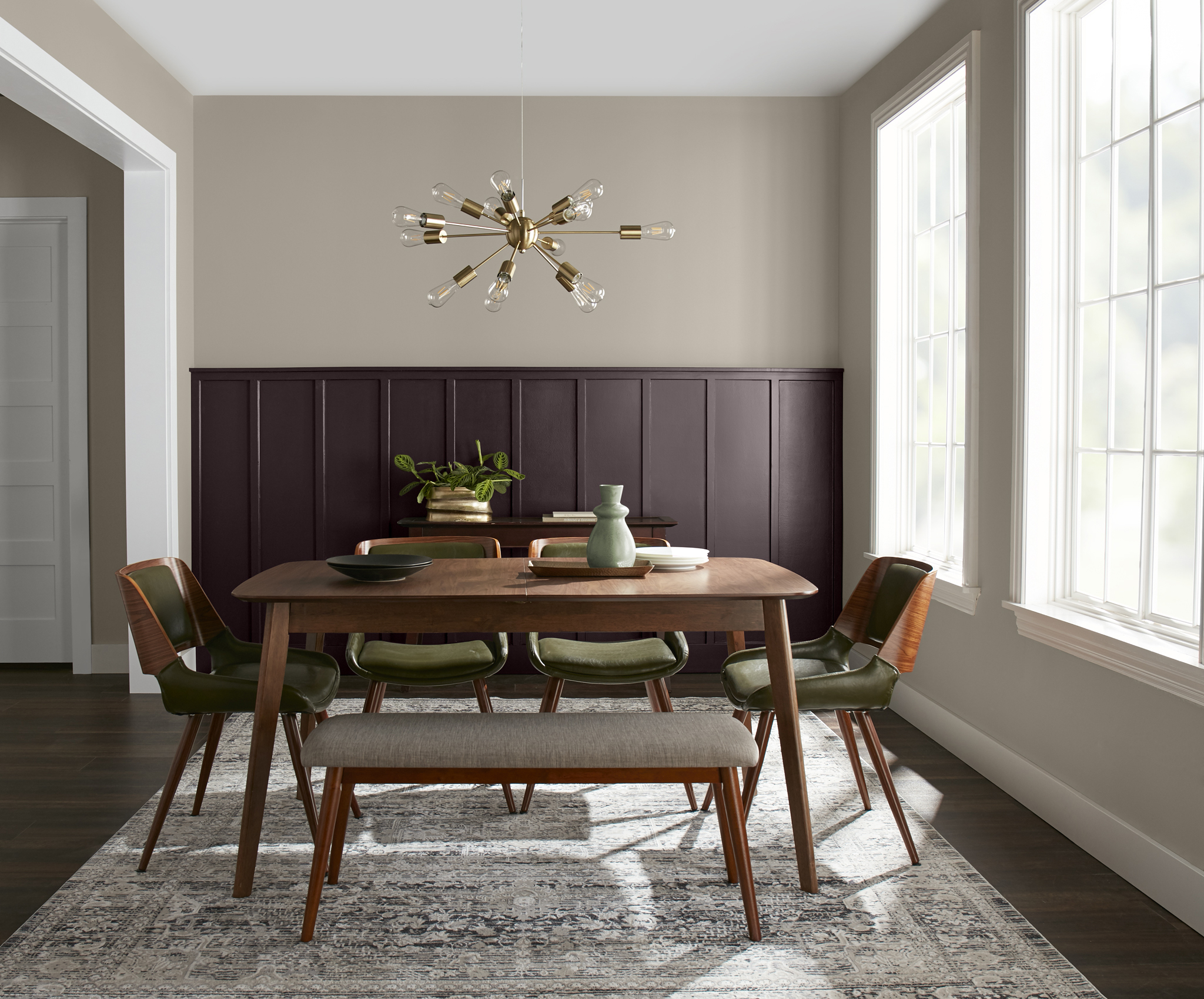
Understanding the difference between paint sheens and how each can create various moods and dimensions in a space is an excellent way to impress your customers. Imagine wowing your customers by describing each sheen, their functional and aesthetic qualities, and the many possibilities for mixing and matching to create a truly unique space.   Selecting the best paint sheen for your client’s space requires understanding how sheen level affects light, color, and texture and keeping up with the latest trends and technology. We caught up with Behr’s Erika Woelfel, Vice President of Color & Creative, and Sid Maxey, Senior Director of Research & Development for the latest and greatest in paint sheens.     Sheen Technology Sheen determines how much light reflects off the coating. Lower sheens absorb light, giving a matte finish, and higher sheens reflect light, giving a glossier finish.     Traditionally, a lower sheen has been achieved by adding more extender pigmentation like calcium carbonate, talcs, micas, etc.   If you looked at it under magnification, it would kind of look like the surface of the moon or like a mountain range,” said Maxey. This surface texture absorbs the light, creating a matte finish.   To create a higher sheen, the ratio of binder to extender pigmentation increases, giving you that smooth, reflective look.   The benefit of a more matte sheen is that the texture not only absorbs light, but also hides imperfections in the wall; however, it’s not as scuff-resistant.   Because the rough material sticks out like mountain ranges, when your shoulder rubs against them on a wall, you break the peaks off of those mountains, creating scuffing, marring, and a sheen differential,” said Maxey.   That breakage is why lower-sheen paint has not historically been considered as durable or cleanable as higher-sheen paint.   Luckily, as the world of paint evolves to meet the needs of professional painters and end users, chemists like Maxey get the opportunity to be creative and build new technologies. In this instance, it’s creating a lower-sheen paint without using a high concentration of extender pigments, giving both high hide and durability.   If you can get rid of those pigments, then you don’t have anything to break, which means that your products are more resistant to scuffing and marring,” says Maxey.   Today, BEHR ULTRA® Interior Paint is a great example of a paint specifically designed to offer that high hide of an ultralow sheen and durability.   And that was achieved through advanced technology,” said Maxey. This durability can be especially important when dealing with darker colors. “If you have a very flat sheen in a navy blue, sometimes marring can happen just by touching it. With BEHR ULTRA Interior Paint, you can get really vivid colors without the risk of sheen change.”   Walls: Dark Secret PPU26-23A   2025 Sheen Design Trends Of course, if you only talk to your clients about the functionality of a sheen, you are missing half its appeal.   Sheen can have a big impact on the mood and atmosphere of a space if you know how to use it,” said Woelfel. “It can bounce light around in really interesting ways.”   One area where sheen can play a big role is in color drenching. Color drenching is when you use a single color for everything in the room (ceiling, walls, trim, baseboard, door, etc.).   There are a couple of approaches that I think have been really interesting from a design-and-paint-application perspective,” said Woelfel.   Single sheen: “You can create a very sophisticated and cohesive look if you’re just using all one sheen, like matte for example, in an entire room,” said Woelfel. Walls: Cracked Pepper PPU18-01; Ceiling: Weathered White HDC-NT-21 Different sheens on different substrates: This follows the more traditional use of sheens, but it creates dimensionality in a color-drenched room. “You can use sheen to highlight architectural features. For example, flat on the walls and semi-gloss on the ceiling can capture the light in an interesting way and create a dynamic atmosphere,” said Woelfel. Walls & Ceiling: Rumors MQ1-15 Sheens can help create architectural features: A chair rail is one way to create architectural interest in a room, but you can take it a step further by doing it with paint. “It is an effective look when the upper wall above the chair rail is painted a matte finish and the lower wall is a higher sheen,” said Woelfel. Upper Wall: Perfect Taupe PPU18-13; Lower Wall: Aubergine N100-7; Trim & Ceiling: Blank Canvas DC-003 Dual-sheen feature: In addition to texture and light reflection, sheen also affects the appearance of color. As the sheen goes up, the color appears darker. Because of this, layering different sheens on the wall in the same color can create shifts of color and dimensionality. One idea is to paint the wall in a matte sheen and then overlay a design in the same color with a glossier sheen. Walls & Graphic Overlay: Weathered White HDC-NT-21; Trim: Whipped Cream DC-001 Sheens are something that I think contractors should explore as they’re doing different projects. It just adds another layer of professionalism. Plus, you can create some really dynamic décors and appealing aesthetics when you get the sheen right,” said Woelfel.   Regardless of whether you are working to create a design that is traditional or modern, or you’re looking to deliver durability in a heavily trafficked space, sheens are an exciting talking point when communicating with a customer.   If you have paint sheen questions or want to learn more, contact your local BEHR® Pro Rep.  
RESIDENTIAL SPACE WITH UPPER WALL ABOVE CHAIR RAIL PAINTED A MATTE FINISH AND THE LOWER WALL IS A HIGHER SHEEN
Paint Sheen Differences
Wood stains have the power to transform ordinary surfaces into timeless expressions of personal style. To elevate the aesthetic of your clients’ outdoor spaces this spring, BEHR® has announced its 2024 Exterior Stain Color of the Year, Tugboat – a brownish grey wood stain reminiscent of weathered materials from boats at sea.   Deck: Tugboat SC-141   The sophisticated blend of muted tones brings subtle color to exterior surfaces while enhancing the natural wood grain for a timeless finish. The versatility of Tugboat adds organic beauty and effortless character with a nautical twist to enrich your clients’ residential or commercial outdoor environments. Tugboat Featured in Solid Color (SC-141) & Semi-Transparent (ST-141) Stain   Both solid and semi-transparent finishes offer a polished look on decks, fences, porches, patio ceilings, railings and more.   Deck: Tugboat ST-141   Apply Tugboat in a solid finish to a wooden fence for a striking visual boundary that blends seamlessly with natural surroundings.   Fence: Tugboat SC-141   Or choose Tugboat in a semi-transparent finish for a front door and port ceiling to add charm and depth to an entry space.   Front Door & Port Ceiling: Tugboat ST-141   The versatility of Tugboat allows for the ease of application on various architectural styles and building materials to create a cohesive and inviting façade.   Exterior Accent: Tugboat SC-141   Give your clients a visually appealing outdoor living space with a wood-stained ceiling featuring Tugboat for a warm and comforting atmosphere.   Ceiling: Tugboat ST-141   Embrace the nautical allure of Tugboat for a refined and captivating outdoor ambiance.   To learn more about Tugboat, exterior wood stain project inspiration, and application tips, visit behrpro.com/2024staincoty.   Note: The 2024 Exterior Stain Color of the Year Tugboat is available exclusively at The Home Depot® in a variety of BEHR® Products, including the #1 rated exterior solid stain, BEHR PREMIUM® Solid Color Waterproofing Stain & Sealer, as well as BEHR PREMIUM® Semi-Transparent Waterproofing Stain & Sealer, BEHR PREMIUM® Advanced DeckOver®, BEHR® Solid Color House & Fence Wood Stain, and BEHR DECKplus® Solid Color Waterproofing Wood Stain.  
2024 Exterior Stain Color of the Year: Tugboat
Give your clients outstanding durability and aesthetics on their projects with BEHR PREMIUM® Direct-To-Metal Paint. This product is an interior and exterior water-based coating designed to keep metal surfaces looking newer longer. It’s an optimal choice for a variety of projects, providing excellent adhesion and corrosion resistance for your residential, commercial, and light industrial jobs. This coating can be applied directly to properly prepared ferrous metal surfaces and is ideally suited for metal fences, railings, doors, and garage doors. Whether you’re looking to enhance curb appeal with newly painted railings for a house or apartment complex or refresh a commercial site with updated doors, BEHR PREMIUM Direct-To-Metal Paint is versatile for a variety of uses. It can also be used on properly prepared and primed new or previously painted drywall, wood, plaster, concrete, and masonry surfaces. The product is available in eggshell and semi-gloss sheens.     Key Features & Benefits BEHR PREMIUM Direct-To-Metal Paint offers several features and benefits to enhance your interior and exterior paint jobs, including:   Corrosion & Rust Resistant: Provides effective protection against corrosion and rust Durable Hard Finish: Withstands tough elements on interior and exterior surfaces Excellent Adhesion: Sticks to properly prepared or primed metal surfaces Chemical Resistant: Prolongs life of the finish Mildew-Resistant Paint Finish: Provides effective protection from mildew growth on the dried paint film Low VOC (< 50 g/L excluding colorants): Meets the most stringent VOC regulations nationwide Easy Soap and Water Clean-Up: No solvent disposal issues Tintable to a Full Range of Colors: Expanded color options       For professional painters or property managers seeking outstanding durability and aesthetics, choose BEHR PREMIUM Direct-To-Metal Paint to elevate your jobs with a product that not only preserves, but also enhances metal surfaces for a lasting finish.     Learn more about BEHR PREMIUM Direct-To-Metal Paint and shop the product here.  
BEHR PREMIUM® Direct-to-Metal Paint
Load More