Olive Green vs. Moss Green: How to Choose and Use These Earthy Green Paint Colors
Olive green and moss green both bring an earthy, nature-inspired feel to interiors, but they do not always read the same. Olive green typically leans warmer with yellow or brown influence, while moss green can range from warm yellow-green to muted gray-green or even blue-green. Because the categories can overlap, the best choice comes down to the specific shade, the light in your room, and the materials already in the space.
Olive green vs. moss green: what is the difference?
| Comparison | Olive green | Moss green |
| Typical undertone | Yellow, brown, or muted gray influence | Can lean yellow/olive, gray, or blue-green |
| Overall feel | Warm, earthy, grounded | Natural, softened, quiet to deep |
| Best fit | Warm woods, cream, clay, brass, organic-modern rooms | Stone, wood, linen, layered greens, relaxed nature-inspired rooms |
| Choose it when | You want warmth and an earthier neutral-like green | You want a muted green with more variation in temperature and depth |
Olive green usually feels warmer and more grounded, while moss green is a broader, softer category inspired by the varied greens found in nature. Some moss greens sit close to olive, while others appear grayer or cooler. That overlap is why comparing actual paint samples is more useful than choosing by color name alone.
A useful BEHR example of the overlap is Grounded T27-01, described as a mossy olive with earthy brown undertones. It sits between the two labels and shows why undertone and depth matter more than category names.
BEHR olive green paint colors to explore
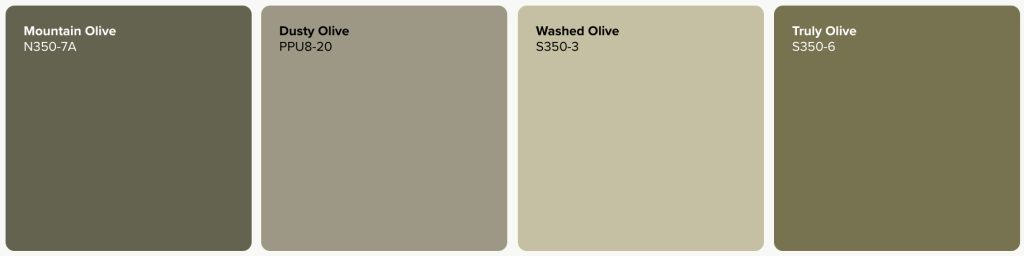
For a darker olive, Mountain Olive N350-7A is a dark green with a warm undertone. It can give a living room, dining room, built-in, or bedroom more depth while staying connected to warm wood and earthy finishes. Dusty Olive PPU8-20 balances gray with earthy green, making it a more muted option when you want olive without as much visual weight. Washed Olive S350-3 moves lighter and softer, while Truly Olive S350-6 offers a more understated Mediterranean green direction.
Consider how much color depth you want in the room. Darker olives can create a more enveloping effect, while softer olives can work as an easy backdrop for cream, tan, wood, and woven textures. Always compare the sample against flooring, upholstery, cabinetry, and trim before deciding.
BEHR moss green paint colors to explore
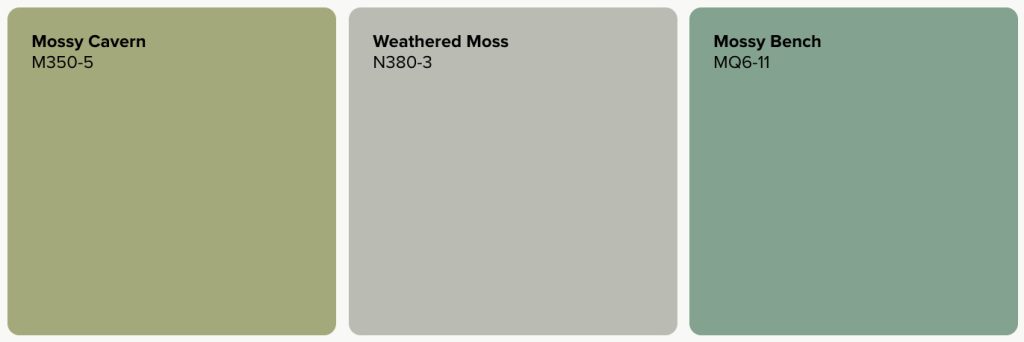
Mossy Cavern M350-5 is a deep green that gives moss a richer, more immersive direction. Weathered Moss N380-3 is much subtler, with gray running through the green for a softened, versatile look. Mossy Bench MQ6-11 shifts cooler as a medium blue-green, showing how broad the moss category can be.
If you are comparing moss and olive side by side, look for the undertone that repeats something already in the room. Warm stone, tan upholstery, walnut, and brass may connect naturally with warmer olive or yellow-moss directions. Cooler stone, gray textiles, or blue-green accents may work more easily with a grayer or cooler moss.
How olive and moss green compare with forest green
Forest green often suggests a deeper, more saturated green, though individual shades can overlap with olive and moss. Choose olive when you want warmth and an earthier, almost neutral effect. Choose moss when you want a softened, nature-inspired green that can move warmer or cooler. Choose a forest-green direction when the goal is stronger contrast or a darker statement.
The exact boundary between these names is not fixed, so use the paint color itself as the deciding factor. Compare undertone, depth, and how the sample behaves next to your room’s permanent finishes rather than relying on the label.
Olive green color palettes for interiors
Warm olive + clay + mustard
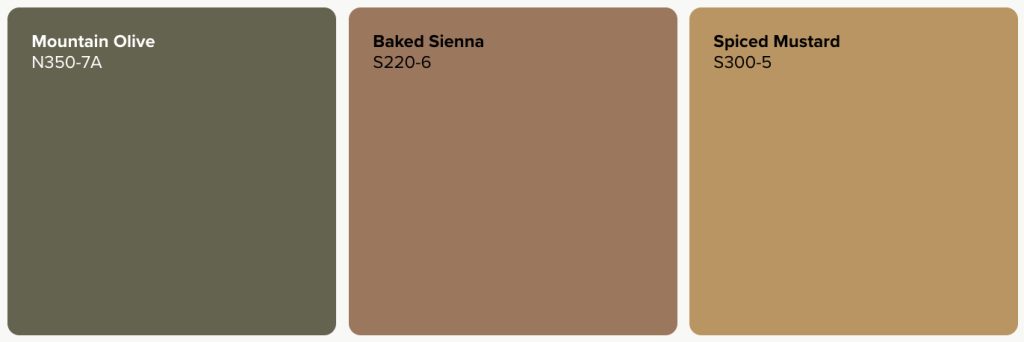
For a warm, layered palette, start with Mountain Olive N350-7A and bring in Baked Sienna S220-6 as an earthy clay note plus Spiced Mustard S300-5 for a muted golden accent. Keep cream or warm white in the mix so the palette has breathing room. This direction works especially well with walnut, oak, linen, woven textures, and aged or brushed brass.
Olive + warm neutrals
For a quieter palette, pair olive with Swiss Coffee 12, Even Better Beige DC-010, or Perfect Taupe PPU18-13. Warm white can lighten the overall scheme, beige can reinforce olive’s earthy character, and taupe or greige can create a more muted transition between green and existing neutral finishes.
Dark olive color codes as a screen reference
If you are building a digital mood board before sampling paint, BEHR’s official color data can help keep the palette consistent on screen. Mountain Olive N350-7A is #64634F, Olive Shade S330-7 is #7D7248, and Truly Olive S350-6 is #777250. Screen color can vary by device and should not replace a physical paint sample in the room.
What neutral colors complement olive green?
Warm white, cream, beige, taupe, greige, and selected grays can all complement olive green. The easiest match usually repeats the temperature already present in the olive and the room. A warm olive can feel cohesive beside cream, tan, or warm greige, while a grayer olive may sit more comfortably with taupe or a restrained gray.
Black or soft black can also work as a small accent when you want definition around doors, hardware, lighting, or furniture. Compare the neutral directly beside the olive sample and your fixed finishes so one color does not make the other appear unexpectedly yellow, gray, or cool.
Olive green living room paint ideas
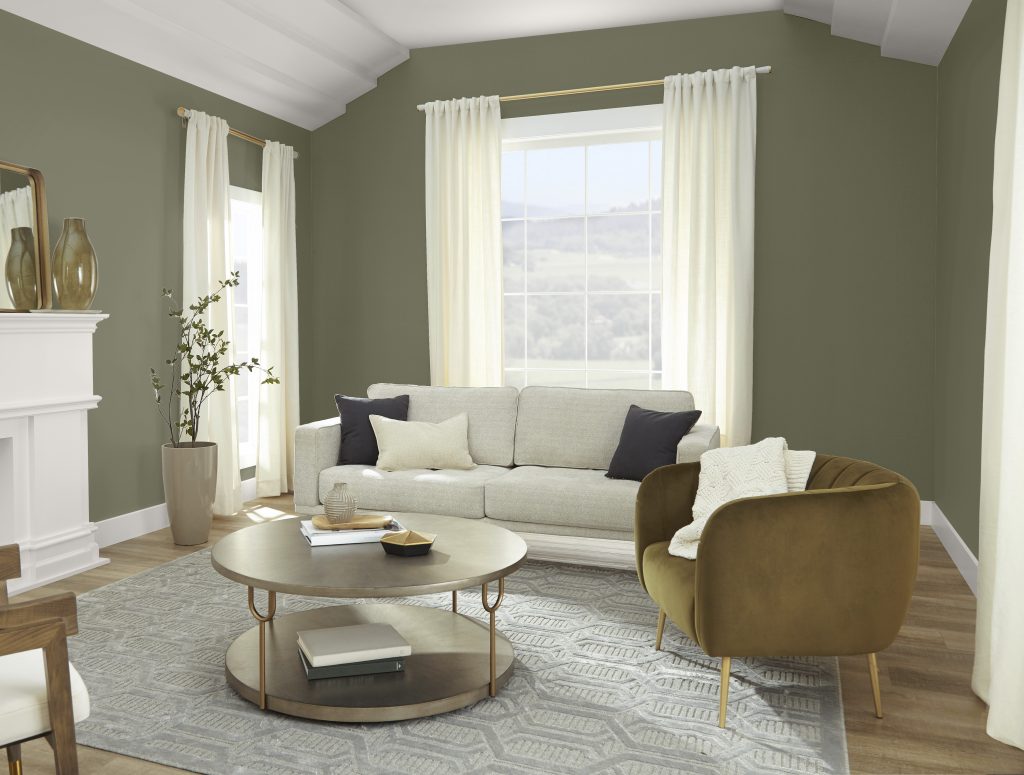
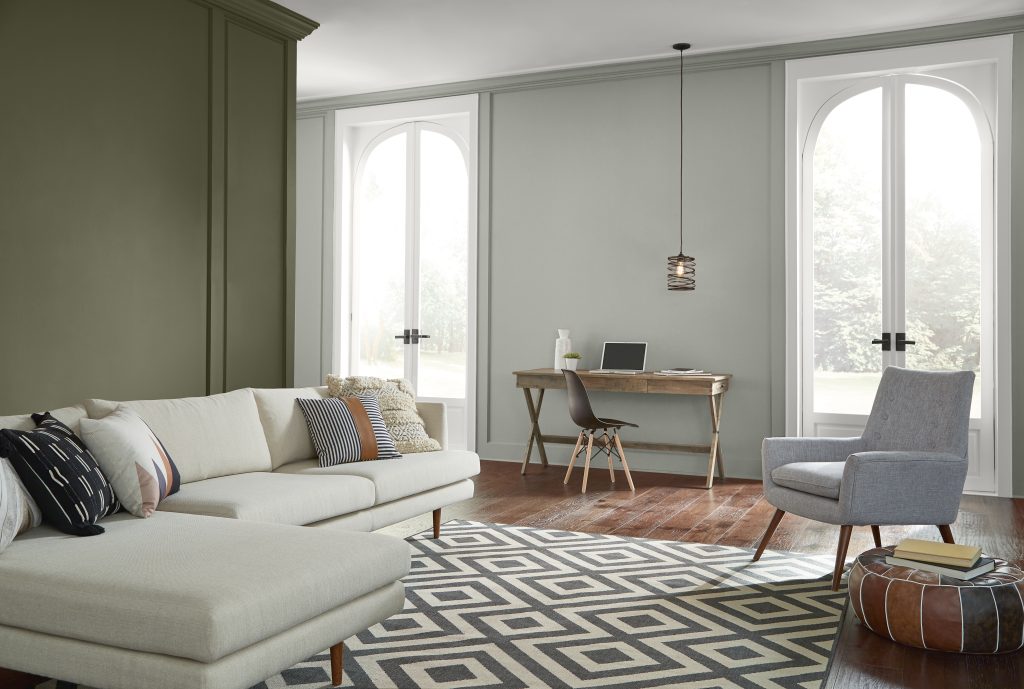
In a living room, olive green can work as a full-room backdrop or as a more focused painted feature. Pair it with cream upholstery and warm wood for a relaxed, organic look, then add brass, clay, or soft black in smaller amounts for contrast. If the room already has strong wood tones, stone, or a patterned rug, sample several olive depths next to those finishes before choosing.
Olive green bedroom ideas
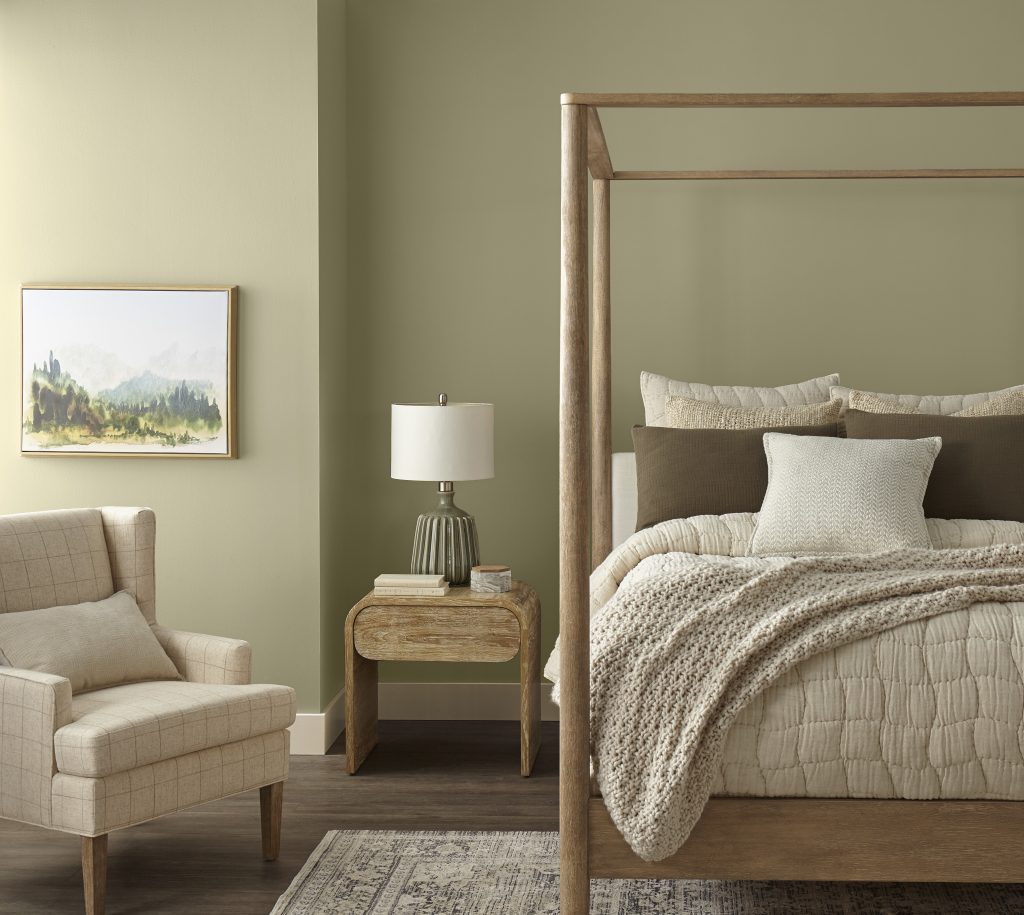
For a bedroom, a muted olive can create a softer, quieter backdrop with warm white bedding, natural wood, and linen. A deeper olive can make the room feel more enveloping, especially when trim and textiles stay light. Moss green is another option when you want a softer or slightly cooler direction. Check the color in morning, afternoon, and lamplight because green can shift noticeably as the light changes.
How to choose between olive green and moss green
Start with the feeling and materials you already have. If you want warmth and your room includes walnut, oak, tan, clay, or brass, begin with olive. If you want a quieter nature-inspired green with more flexibility in undertone, explore moss. If you want a darker, more dramatic statement, compare both with deeper forest-green options before making the final choice.
Explore more green paint colors and preview favorites with the Behr Color Visualizer. Then bring samples into your space and view them beside flooring, cabinetry, upholstery, and trim at different times of day.
Find your earthy green
Olive and moss green can both bring natural depth to a room, but the best choice is the one that works with your light, finishes, and preferred level of warmth. Compare a few BEHR shades in the space, build the palette around materials you already love, and let the room guide the final decision.
Colorfully yours,
Larayne
Olive green is usually the warmer direction because it often carries yellow or brown influence. Moss green is more variable and can lean warm, gray, or blue-green depending on the shade
No. The categories can overlap, but moss green covers a wider range of muted natural greens. Some moss shades sit close to olive, while others appear grayer, cooler, or more distinctly green.
Warm white, cream, beige, taupe, greige, and some soft grays can work well with olive green. Choose the neutral by comparing undertones with the olive, your light, and the room’s fixed finishes.
Not necessarily. Both moss and olive are available from light and muted to deep and dramatic. Compare the actual paint shades rather than assuming one category is always darker.
Yes, especially when the two shades have enough difference in depth or undertone to look intentional. Use one as the main color and the other as a smaller accent, then connect them with a shared neutral or natural material.