Earthy Green Color Palettes for an Organic Modern Home
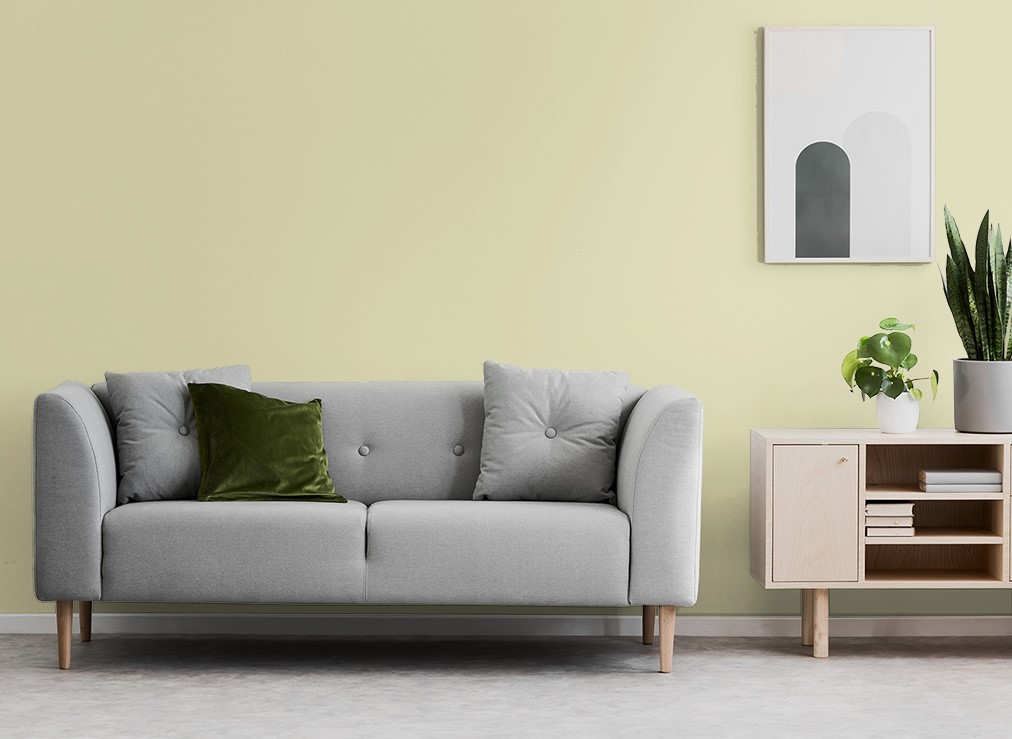
Earthy green is a natural fit for an organic modern home because it brings color into a restrained palette without losing the connection to nature. Pair forest-like green, mossy olive, or muted sage with warm neutrals, clay tones, wood, stone, and simple dark accents to create a room that feels layered, grounded, and clean-lined.
The key is balance. Let one green lead, then use the rest of the palette to add warmth, contrast, and breathing room rather than giving every color equal weight.
What is an organic modern color palette?
An organic modern color palette combines nature-inspired color with the simplicity of modern design. Warm whites, beige, clay, brown, and earthy greens create the foundation, while natural wood, stone, linen, wool, and restrained metal accents add texture without making the room feel busy.
Green can be the color anchor in this style. A deep green-gray creates stronger contrast, mossy olive feels especially connected to the landscape, and muted sage keeps the look lighter. The most cohesive palettes repeat those tones across paint, furnishings, and materials instead of introducing a long list of unrelated colors.
How to build an earthy green palette
Start with one earthy green for the largest painted surface or focal feature. Add a warm neutral to create visual space, then choose one earth-toned accent such as terracotta or clay. A small amount of soft black or another deep neutral can sharpen the clean lines that give organic modern rooms their contemporary edge.
Natural materials can carry part of the palette, too. Oak, walnut, stone, leather, linen, and handmade ceramics add warm brown, cream, and mineral tones without requiring another paint color. That mix of color and texture helps the room feel collected rather than overly coordinated.
Muted forest green + terracotta + warm white
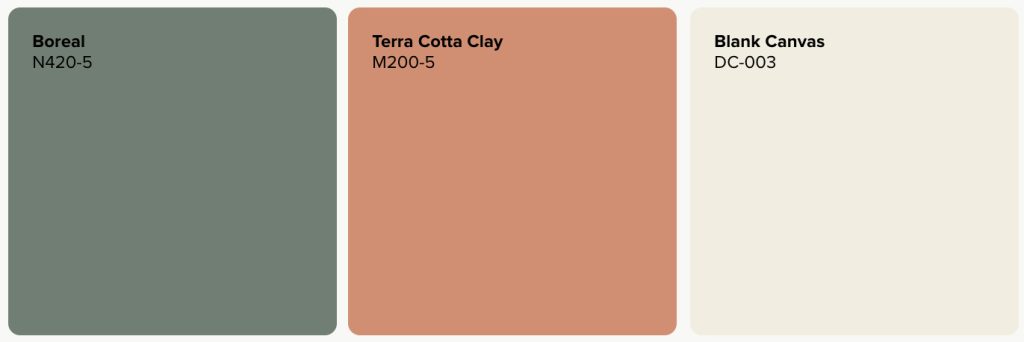
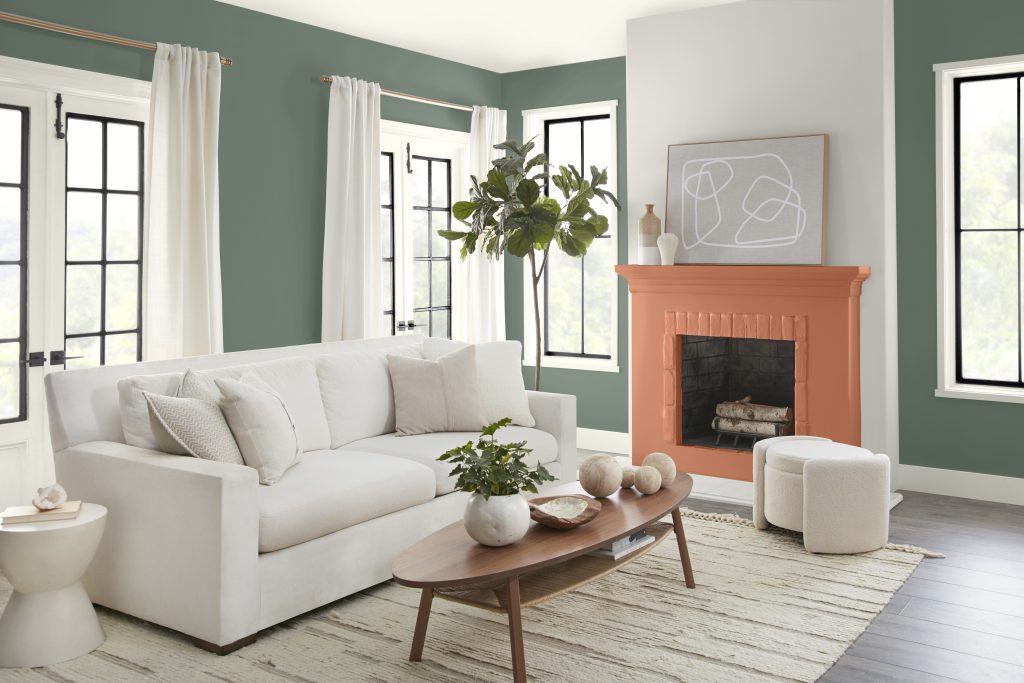
For a muted forest green and terracotta color palette, start with Boreal N420-5, a rich green-gray that can bring forest-like depth to an organic modern room. Pair it with Terra Cotta Clay M200-5 for earthy warmth and Blank Canvas DC-003 to keep the palette open and balanced.
Use Boreal on walls, built-ins, or a substantial focal surface. Terra Cotta Clay can add contrast on a smaller painted feature or inspire the room’s ceramics and textiles, while Blank Canvas works as a light counterpoint on trim, ceilings, or adjoining surfaces. Oak or walnut, pale stone, linen, and a few matte black details can connect the colors to the room’s materials.
Mossy olive + clay + warm beige
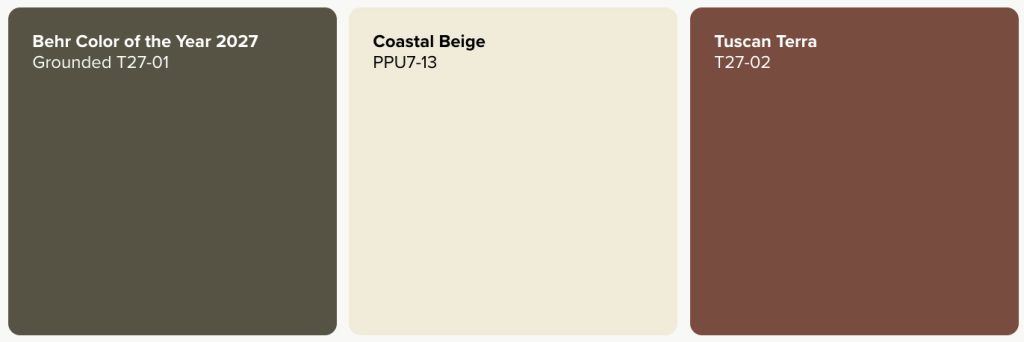
For a warm, earth-inspired palette, build around Grounded T27-01, the BEHR 2027 Color of the Year. Its mossy olive character and earthy brown undertones make it a natural bridge between green paint and warm organic materials. Pair it with Tuscan Terra T27-02 and Coastal Beige PPU7-13 for a palette that stays warm and grounded.
Grounded can cover a larger wall area or cabinetry, while a clay tone like Tuscan Terra works best where you want a warmer moment of contrast. Coastal Beige can create a quieter transition on nearby walls or trim. Add medium wood, woven fibers, warm stone, and aged metal to reinforce the natural color story without making every element match.
Muted sage + terracotta + creamy white
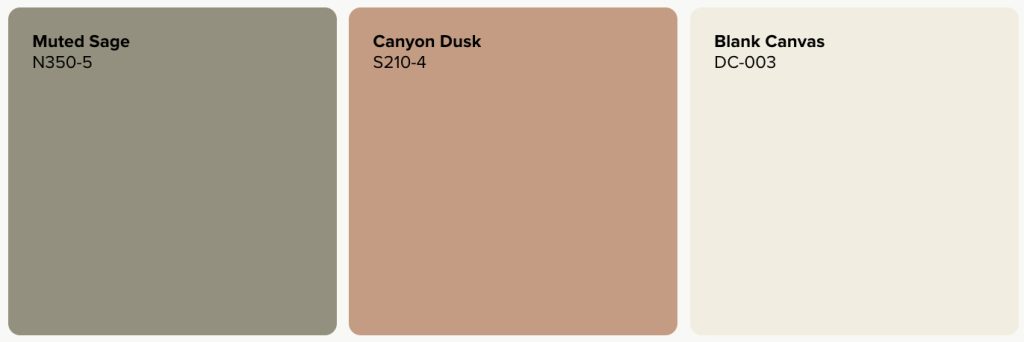
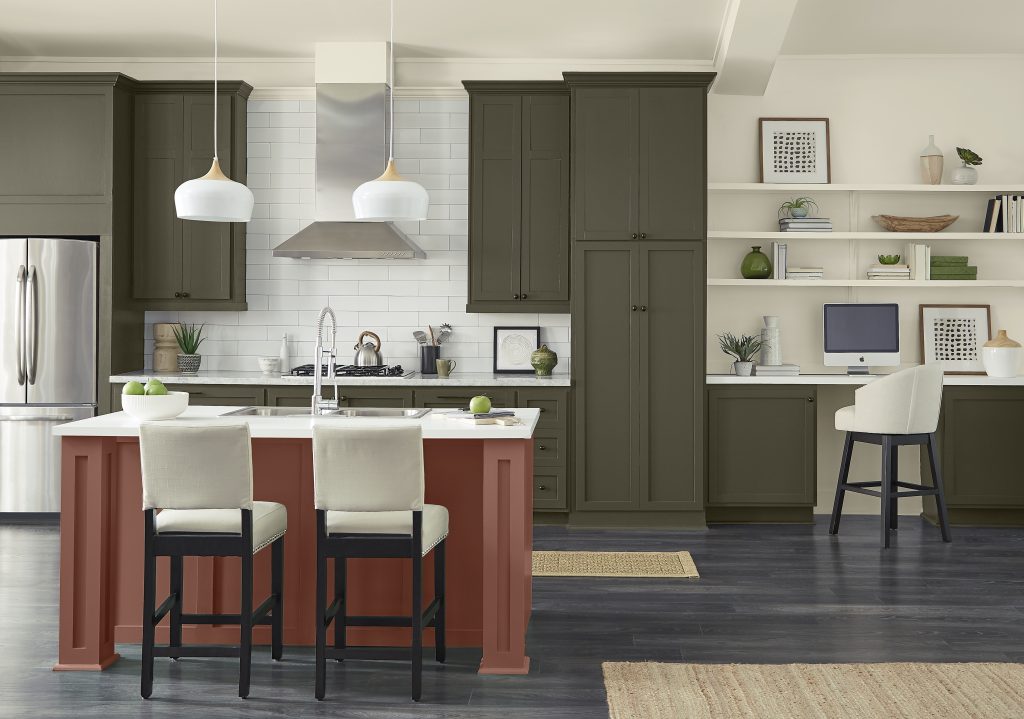
A warm terracotta and sage green palette creates a softly muted take on organic modern style. Muted Sage N350-5 gives the room a soft green foundation, while Canyon Dusk S210-4 brings in an earthy terracotta note. Use Blank Canvas DC-003 to create a warm, light break between the two.
This combination works especially well when the room already has pale or medium wood, woven textures, linen, and handmade ceramics. Keep the terracotta more concentrated than the sage so the palette stays relaxed, then repeat the warm tone in smaller details to make the room feel connected.
How to use earthy green palettes by room
Living room
Use earthy green on the walls or built-ins, then let upholstery and textiles soften the contrast. Warm wood furniture, linen, leather, and a terracotta or clay accent can add depth without crowding the room. If the green is dark, a warm white or beige on the ceiling and adjacent surfaces can keep the space visually balanced.
Kitchen
Cabinetry is a natural place for an earthy green, but compare the paint directly with countertops, backsplash, flooring, and hardware before choosing. Grounded or Boreal can create more depth, while a lighter surrounding neutral gives stone and wood finishes room to stand out. Bring terracotta in selectively so it complements, rather than competes with, fixed finishes.
Bedroom
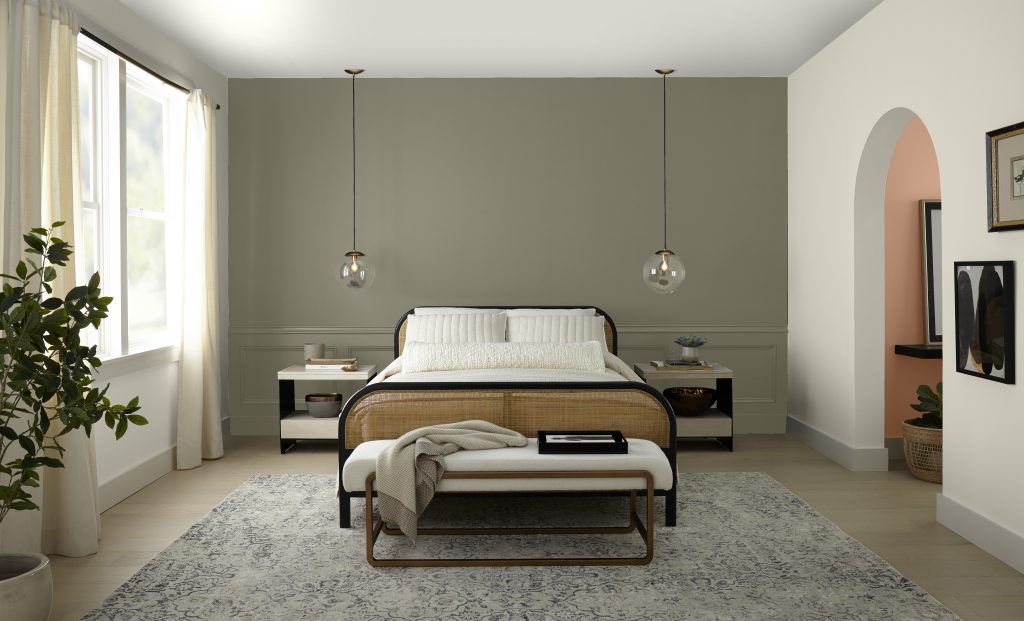
For a softer bedroom, use muted sage or mossy olive with creamy white, linen, and natural wood. Keep the strongest clay or terracotta tone to a smaller surface or accent. In lower light, deeper greens can feel more enveloping, so test the full palette together before committing to a large area.
Dining room
Dining rooms can handle stronger depth, especially in evening light. A forest-like green on the walls with warm wood furniture and a terracotta accent creates a richer palette, while a light neutral on trim or ceiling keeps the architecture defined. Check the colors both in daylight and with the fixtures you use at night.
Natural materials that complete the palette
Organic modern rooms rely on texture as much as color. White oak can keep a green palette light, while walnut adds deeper warmth. Stone and plaster-like finishes introduce soft mineral variation, and linen, wool, leather, and woven fibers can repeat the cream, tan, and brown notes already present in the paint palette.
For contrast, use dark metal or soft black in smaller doses through lighting, hardware, frames, or furniture details. The goal is definition, not a second dominant color. Let the materials support the green and earth tones rather than compete with them.
Check the palette in your room’s light
Earthy greens, warm neutrals, and terracotta can all shift as the light changes. A green may look grayer in cooler light or more olive and earthy in warmer light, while clay tones can become more pronounced under warm artificial lighting. Existing flooring, cabinetry, stone, and upholstery can change the relationship between the colors, too.
Compare the colors together in the actual room and revisit them at different times of day. You can also try your favorites in the Behr Color Visualizer before narrowing the palette and testing physical samples.
Create your organic modern palette
Choose the earthy green that best fits your room, then build around it with warm neutrals, clay tones, and natural materials. Explore more green paint colors and use the Color Visualizer to compare combinations before you sample your favorites in the space.
Colorfully yours,
Larayne
Organic modern palettes often combine warm whites, beige, taupe, brown, clay or terracotta, and nature-inspired greens. Natural wood, stone, linen, leather, and restrained dark accents can extend those colors through the room without adding more paint shades.
Yes. Terracotta can bring warm, earthy contrast to a deep or muted forest-like green. Keep one color dominant and use the other more selectively, then add a light warm neutral to give the combination breathing room.
Warm white, cream, beige, greige, and some soft taupes can all work with earthy green. The best choice depends on the green’s undertone, the room’s light, and fixed finishes, so compare the neutral and green together before deciding.
Light oak can create a softer, airier combination, while walnut can add richer contrast. Existing floors and furniture should guide the final choice. Compare the wood beside your paint sample to see whether the overall palette feels balanced in the room.
Yes. Muted sage works especially well when you want the style to feel lighter and lower contrast. Pair it with warm off-white, terracotta or clay, natural wood, linen, and simple dark details for a palette that stays restrained and nature-connected.