
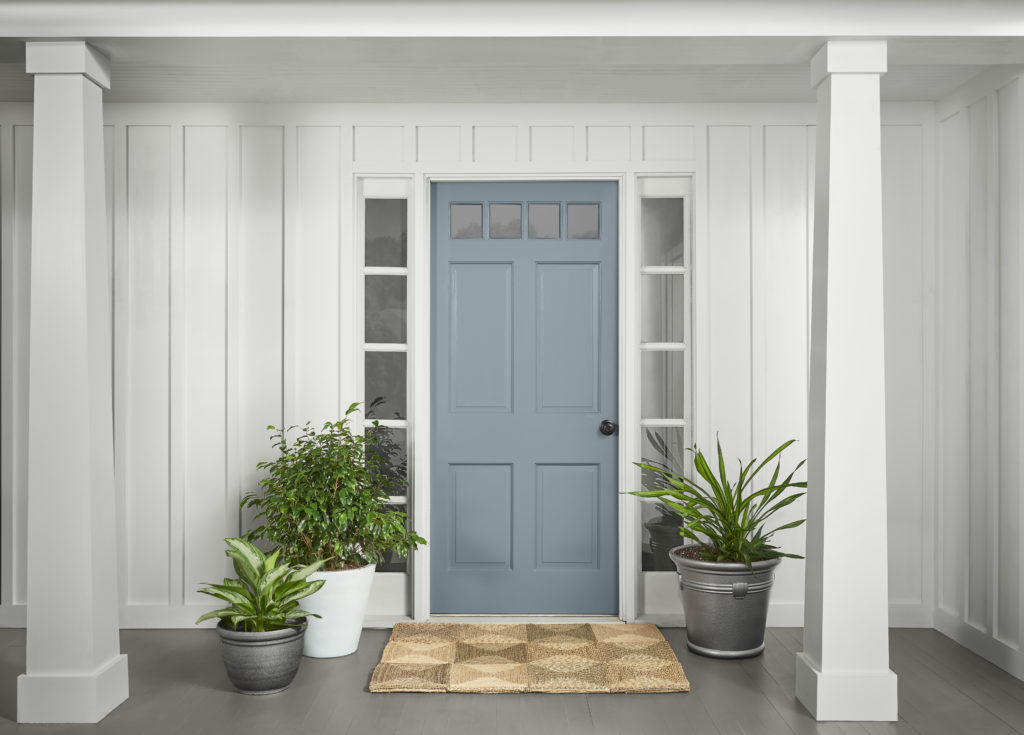
The front entry of a home enhances the facade of a house and can easily be updated for different seasons and styling.
Follow the steps by steps below for this quick and easy front door makeover. If you are more visual, jump down to the end of the article for the video!
What is the most durable paint for an exterior front door?
For maximum durability on an exterior front door, look for a paint specifically formulated for high-touch, high-traffic surfaces. BEHR PREMIUM™ Cabinet, Door & Trim Enamel is an excellent choice because it offers a hard, durable finish that resists scuffs, fading, and weather exposure while maintaining long-lasting color and smooth coverage. Its strong adhesion and smooth leveling properties make it ideal for front doors that need both beauty and performance.
Behr’s Featured Product, Color, & Sheen:
BEHR PREMIUM™ Cabinet, Door & Trim Enamel tinted to Adirondack Blue N480-5
Gloss vs. Satin vs. Matte: Which Finish Is Best for Doors?
When choosing a finish for your front door, durability and appearance both matter. Gloss and semi-gloss finishes are highly durable and reflective, making them ideal for exterior doors that need easy cleaning and strong curb appeal. Satin offers a softer sheen with excellent durability, providing a modern look while still resisting scuffs and wear. Matte finishes have minimal shine but are generally less common for front doors since they don’t highlight color or withstand frequent handling as well. For long-lasting performance and a polished result, Satin or Semi-Gloss are the most popular choices for exterior doors.
How many quarts of paint do I need for a standard front door?
For a standard front door, one quart of paint is typically enough for two coats, depending on the surface texture and color change. For doors, multiply the width by the height to determine the number of square feet, then check the paint’s coverage rate on the label to confirm how much you’ll need. Most standard exterior doors measure about 20 square feet per side, so a quart usually provides sufficient coverage.
Materials:
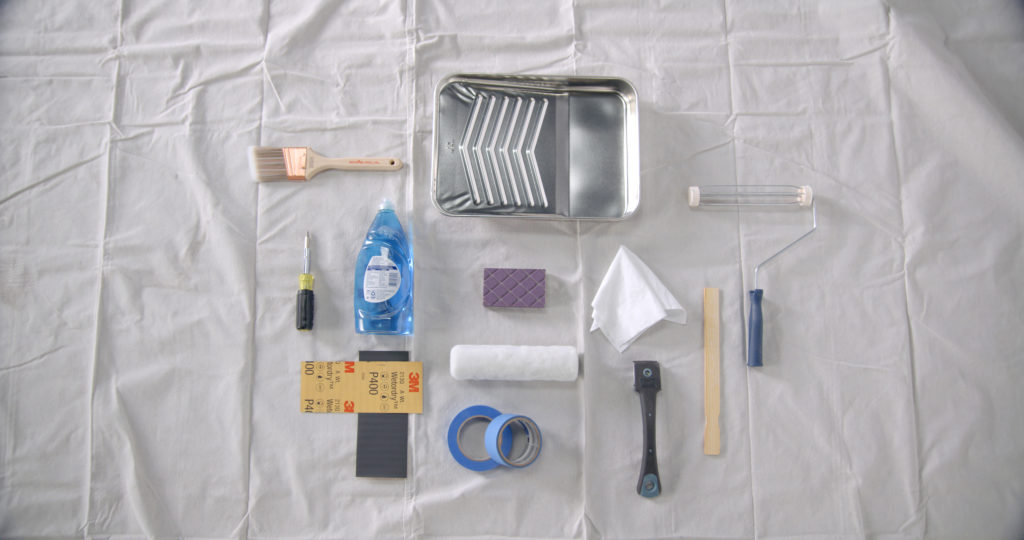
• Paint Tray
• Roller
• Paint Brush
• Paint Scraper
• Sanding Sponge
• Sandpaper
• Painter’s Tape
• Stir stick
• Cleaning Supplies
• Cloth Rags
• Drop Cloth
Tip: Always wear appropriate protective gear.
Step 1: Surface Prep — Sanding, Degreasing, and De-Glossing
Prep
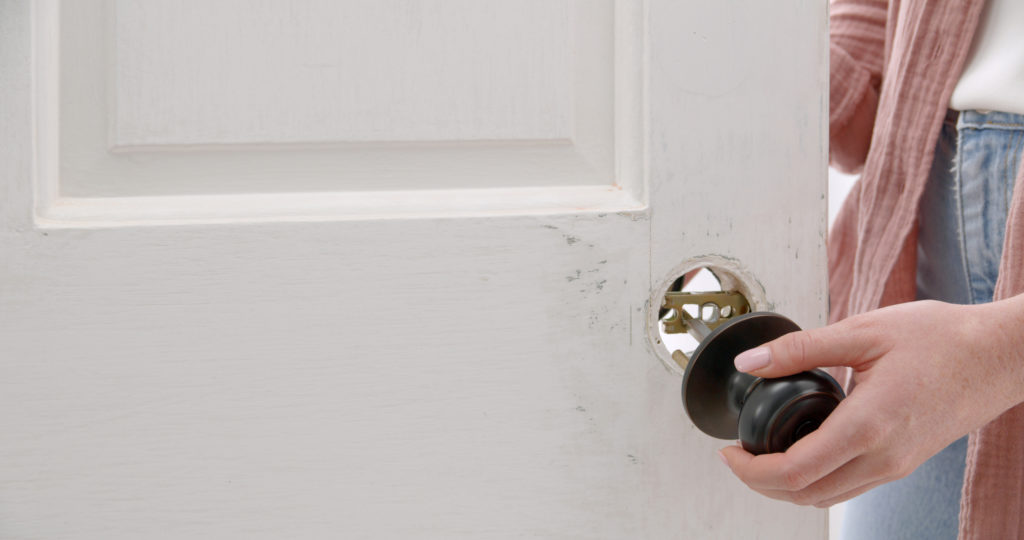
Remove any non-permanent hardware from your door.
Can you paint a door without taking it off the hinges?
Yes. While removing the door can make the project easier, it’s not required. If you leave the door on its hinges, make sure it is securely propped open, protect surrounding surfaces with painter’s tape and drop cloths, and allow proper drying time before closing to prevent sticking.
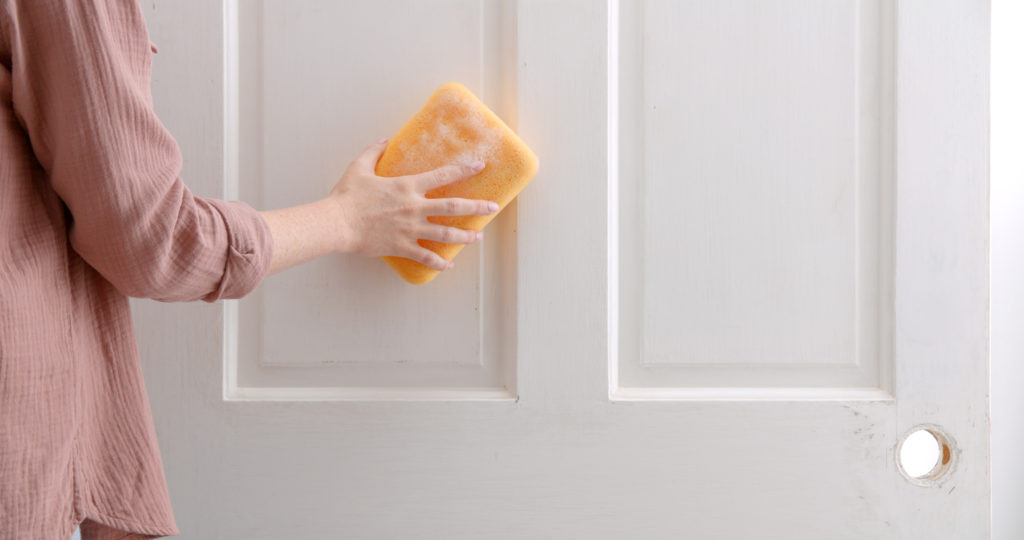
Wash off dirt, grease and grime from your door with soap and water. Rinse and let dry.
Tip: Make sure surface is completely clean and dry before painting.
Gently remove any peeling or flaking areas with a paint scraper
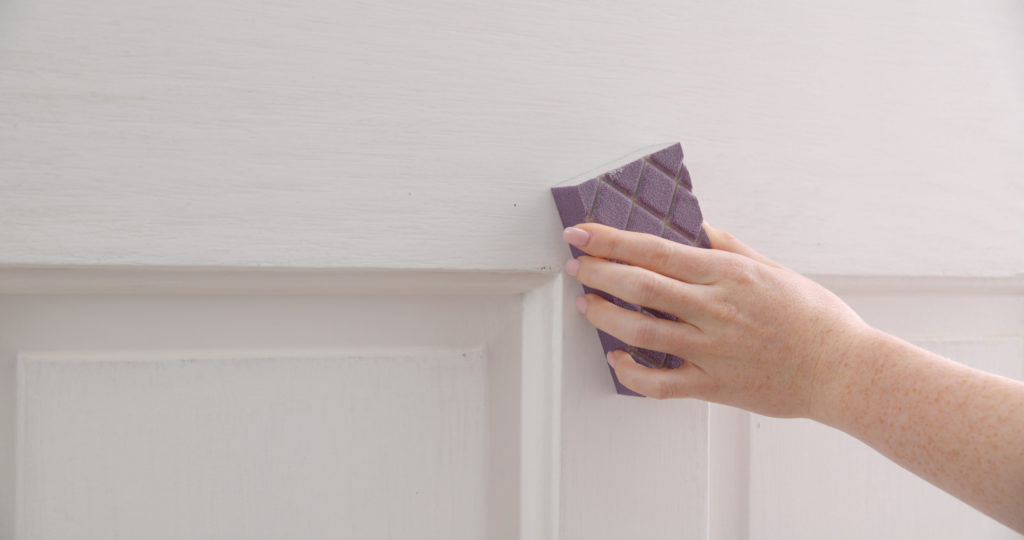
Lightly sand your door with a sanding sponge.
Tip: If the door is painted with an oil-based paint, use a medium-grit sanding sponge or sandpaper
Step 2
Prime
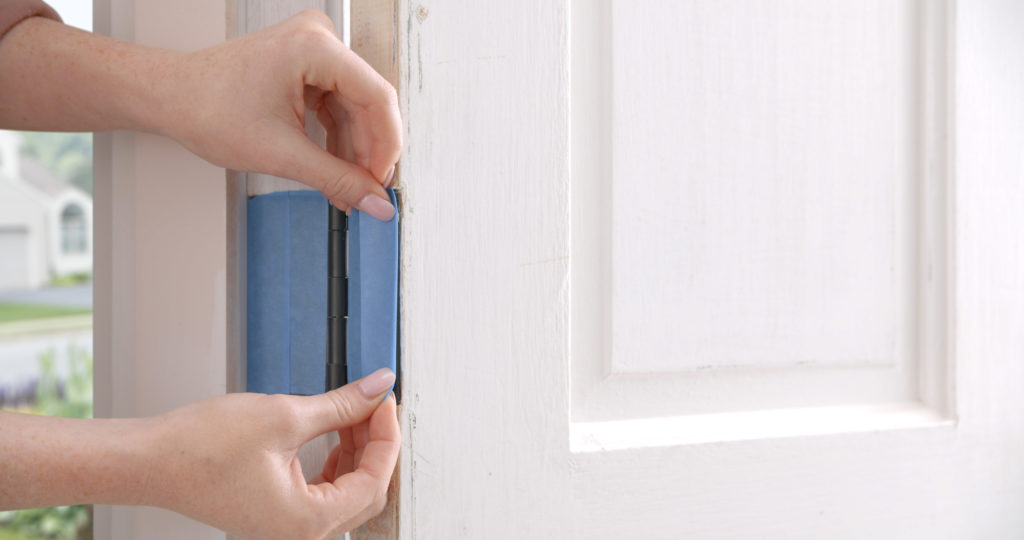
Wipe away and dust with a lint-free cloth, then tape along existing hardware to protect any areas you don’t want to get primer or paint on.
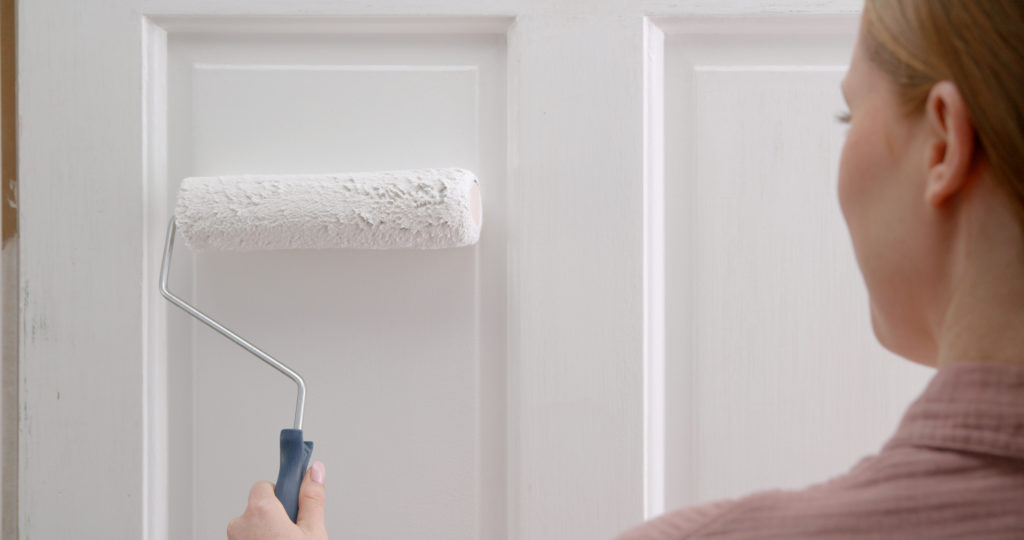
Apply a coat of primer. For larger areas, use a paint roller. For the corners and crevices, use an angled brush for application.
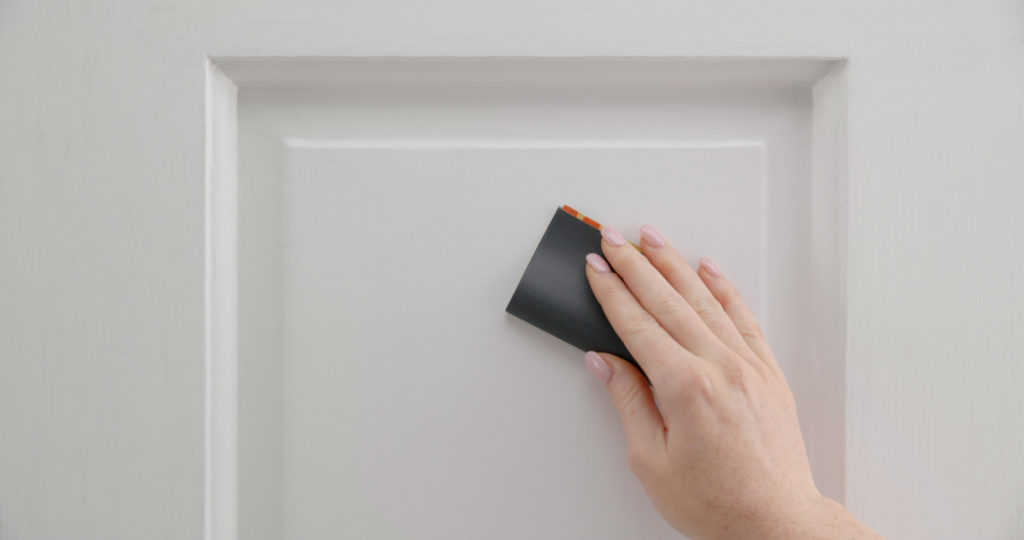
Use 400 grit synthetic sandpaper to scuff-sand primer, then wipe down with a lint-free cloth to remove all sanding dust.
Step 3
Paint
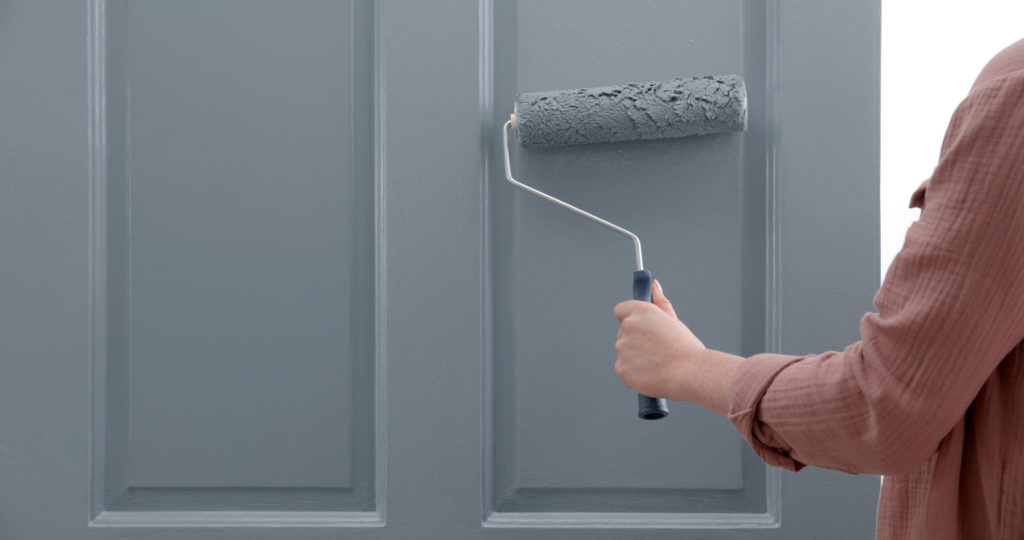
Apply two coats of BEHR PREMIUM™ Cabinet, Door & Trim Enamel, one of the best paints for an exterior door, tinted to Adirondack Blue N480-5 with a small brush, roller or sprayer. For a streak-free finish, use a high-quality angled brush for detailed panels and edges, a foam roller to achieve a smooth, even surface with minimal texture, or a sprayer for the most uniform, professional-looking results.
Tip: Lightly scuff-sand with an ultra-fine sanding sponge or 400-600 grit sandpaper between coats.
Bonus Tip: To help prevent dark door colors from warping or fading in direct sun, choose a high-quality exterior enamel, like BEHR PREMIUM™ Cabinet, Door & Trim Enamel, designed for durability and UV resistance. Proper priming, applying thin even coats, and allowing adequate dry time between coats can help reduce heat absorption and surface stress. If your door receives intense afternoon sun, consider using a satin or semi-gloss finish for added protection and longevity.
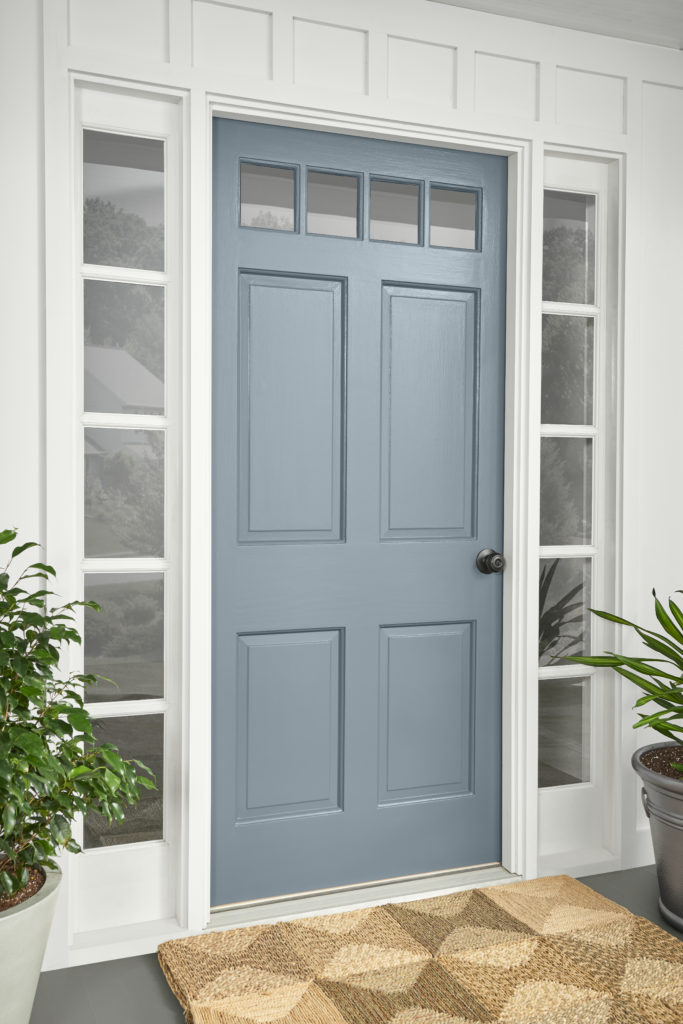
Remove the painter’s tape before the paint is fully dry. Once dry, reattach hardware to door.
Click on the video below to see a step by step of this project.
For more information on BEHR PREMIUM™ Cabinet, Door & Trim Enamel and other BEHR products visit Behr.com.
Colorfully yours,
Larayne
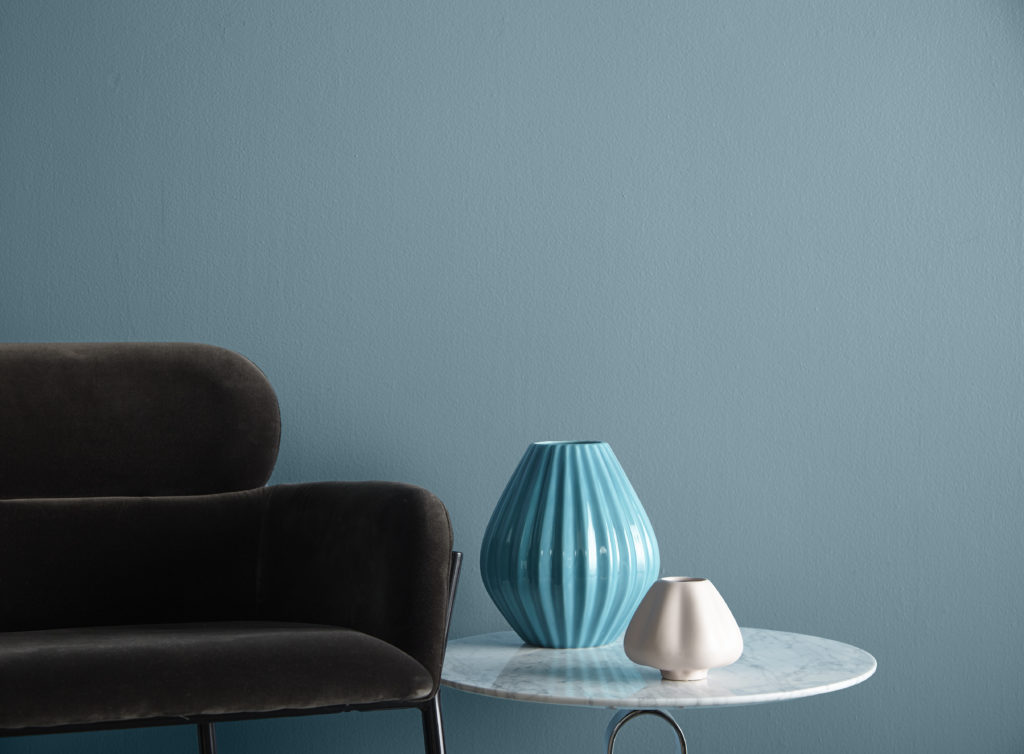
What color blue is this?
Thanks
Hello Susie, thank you for visiting our blog!
That color is Adirondack Blue N480-5.
https://www.behr.com/consumer/ColorDetailView/N480-5
Colorfully Yours,
Deanna