
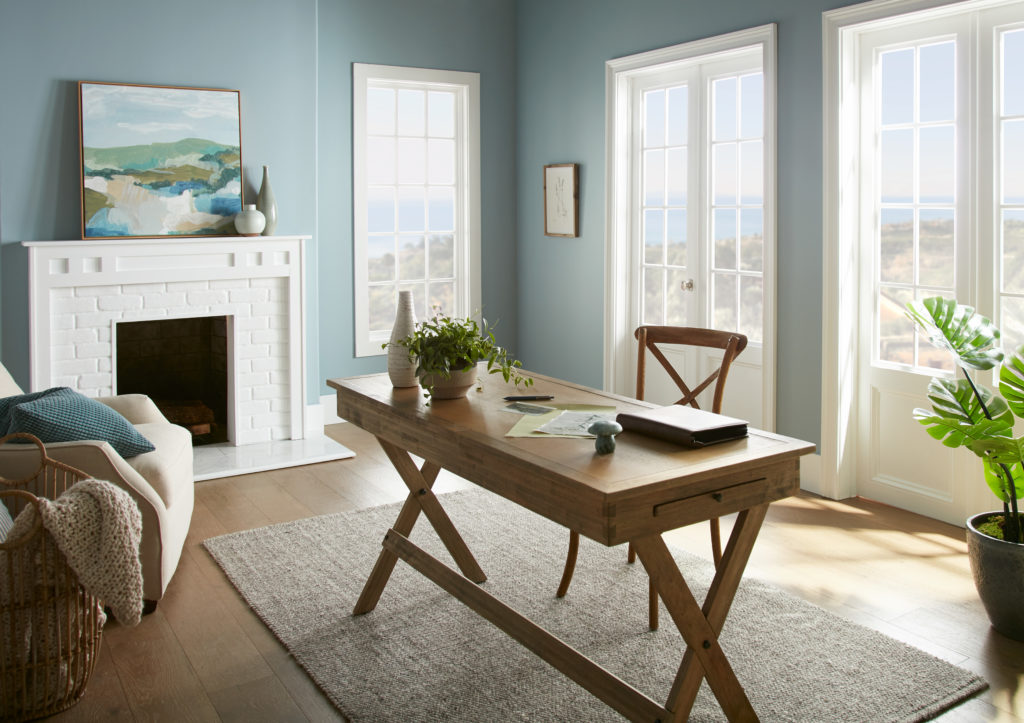
With so many people working remotely or on hybrid schedules, the home office has become one of the most important rooms in the house. Workspaces are now thoughtfully carved out of living rooms, kitchen nooks, attics, basements, spare rooms, closets, and even garages. No matter the size or location, this is a room where a significant amount of time is spent each day.
The best modern office paint colors for productivity are those that support focus, balance, and sustained energy. Soft blues encourage concentration and clear thinking, making them ideal for task-driven work. Neutral tones like warm whites and light grays help reduce visual distractions and create a clean, organized backdrop. Muted greens offer a sense of calm and restoration, which can help prevent mental fatigue during long workdays.
Because productivity is the number one consideration for a successful workspace, choosing the right paint color plays an important role in how the room functions. The right color can make a home office feel more focused, comfortable, and effective, no matter where it’s located in the home.
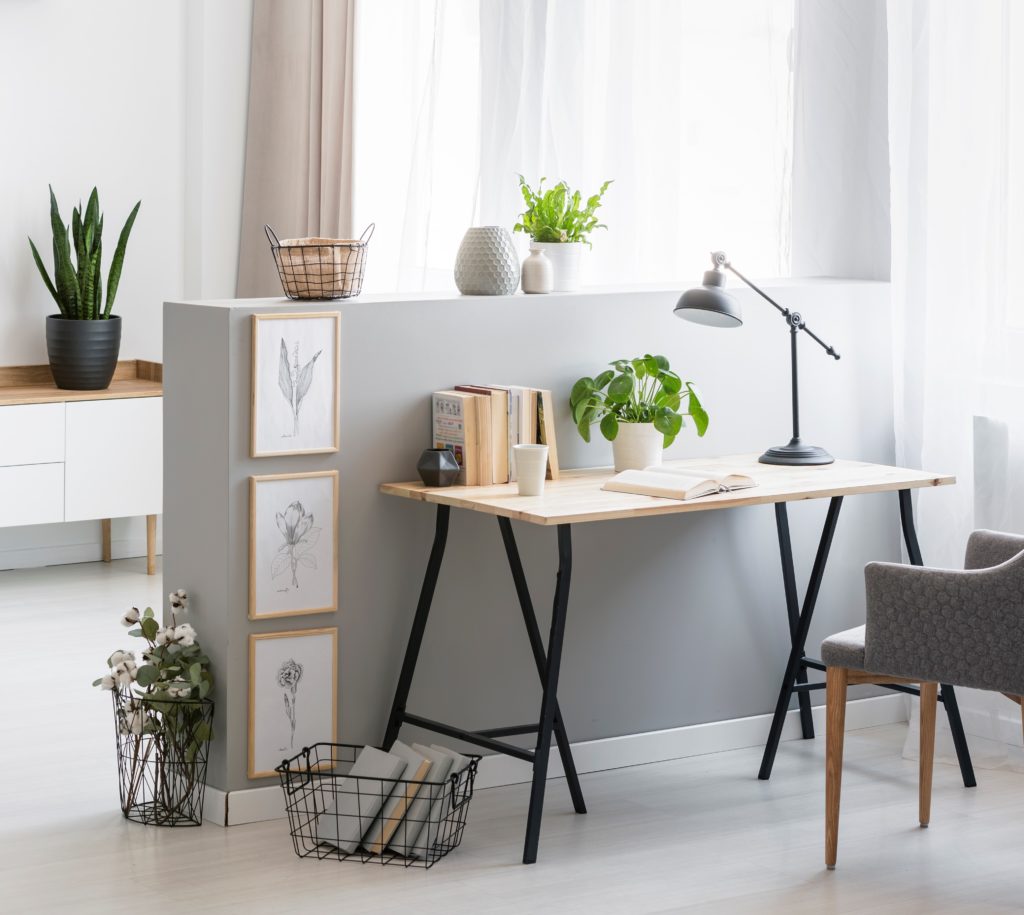
When choosing color for your home office, consider the types of activities that take place there. How does the room need to feel for you to do your best work? Do you need to sit quietly and focus, or will you take calls and join video conferences? Will you need to move around the room or have tables available to spread out projects. Is this your private workplace, or do you share the area with other family members?
How office wall colors affect mood is just as important as aesthetics. Cool, muted tones tend to create a calming effect, while warm or saturated colors can increase energy and encourage conversation.
Proper lighting is a must: natural light from a window helps keep energy levels at their peak. Task lighting can also keep eyes from becoming fatigued if they focus on small details for a long time. Color also looks better in well-lit rooms!
For home offices with no windows or limited daylight, choose lighter paint colors with a higher Light Reflectance Value, such as soft whites, pale grays or light blues. These shades help reflect available light and prevent the space from feeling closed in.
Let’s take a look at how color can impact your working style:
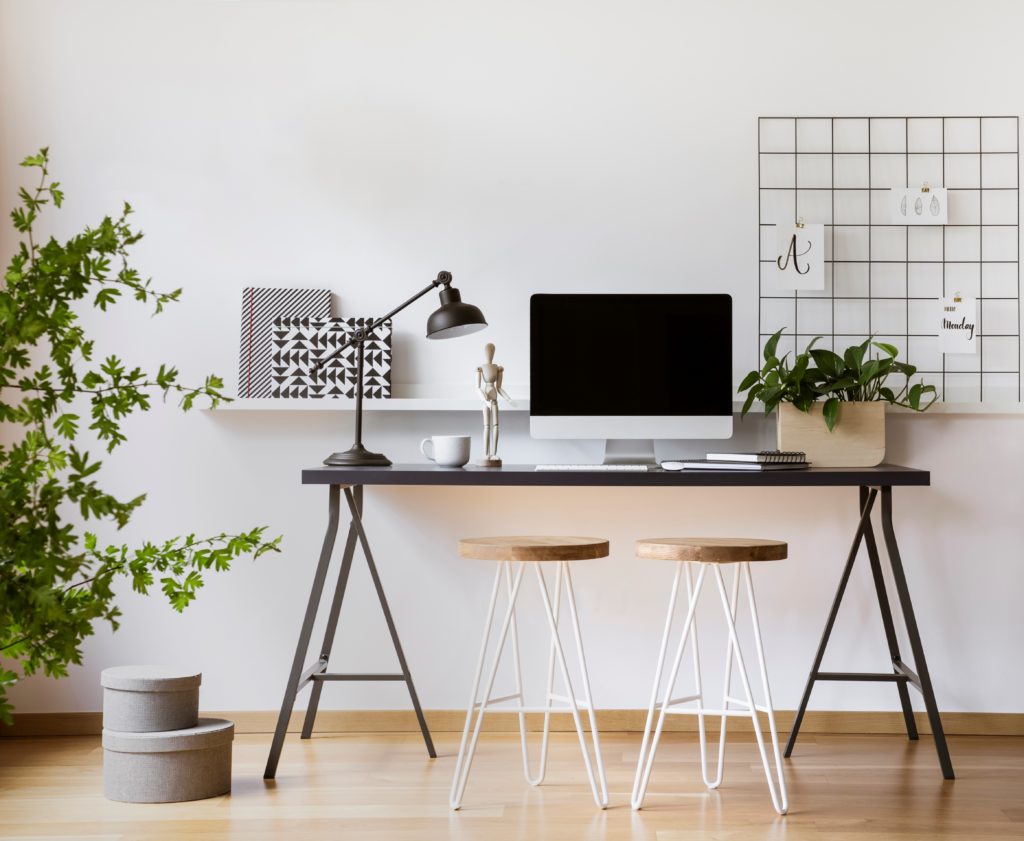
White is a great color for small spaces to help areas feel larger and more open. The temperature of white also plays an important role in mood and productivity. Warm whites tend to create a more comfortable, welcoming environment that supports focus without feeling sterile, while cooler whites feel crisp and energizing, helping promote alertness and mental clarity in workspaces. Choosing the right white for your office can help balance openness with productivity, depending on how you want the space to feel.
For home office workers who spend time on video calls, white and off-white walls create a clean, professional Zoom background and help reflect light evenly onto the face.
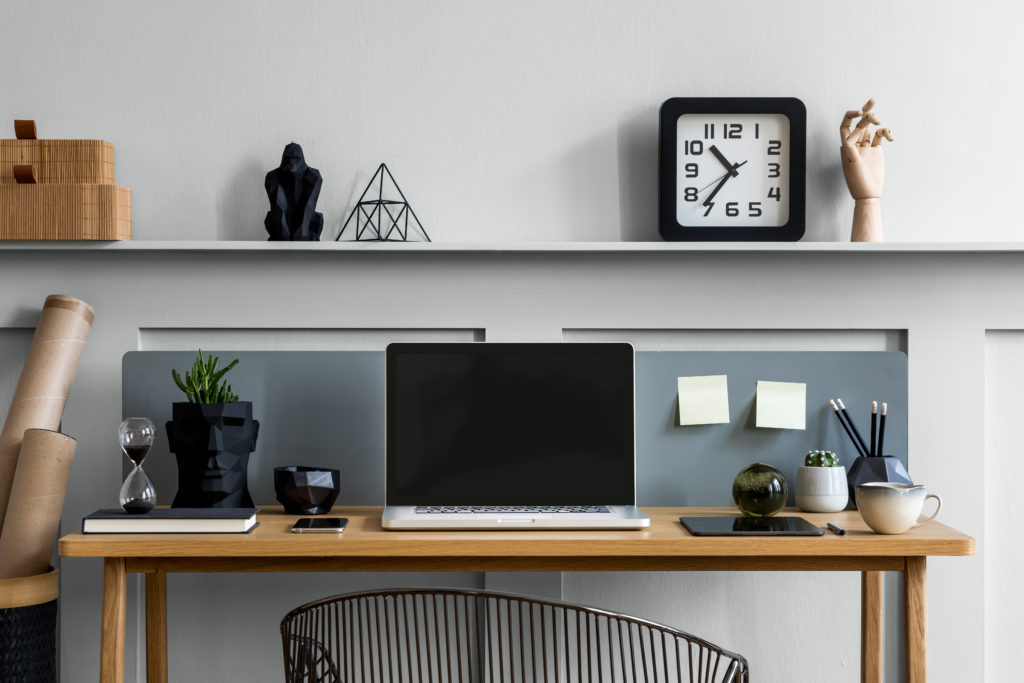
Gray is a color that feels balanced, does not distract and easily coordinates with other office furniture or colorful accessories.
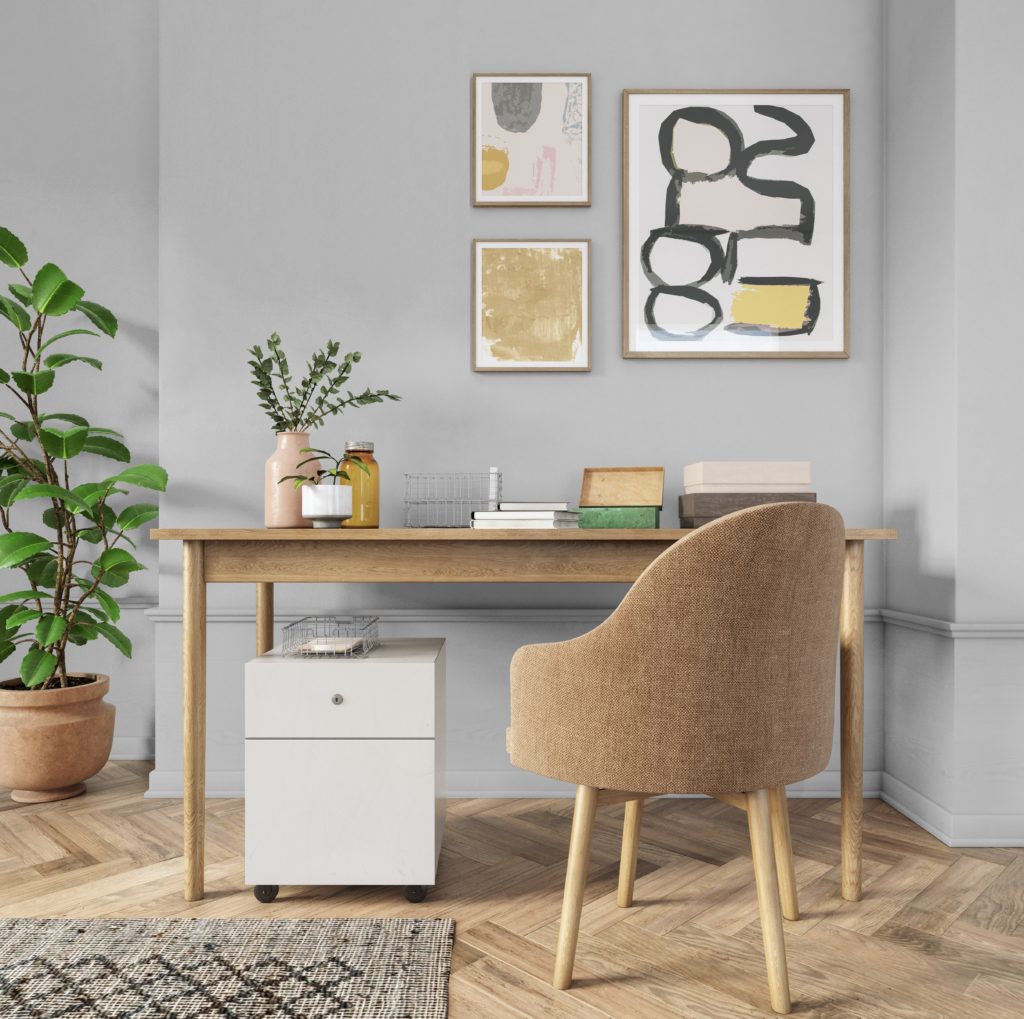
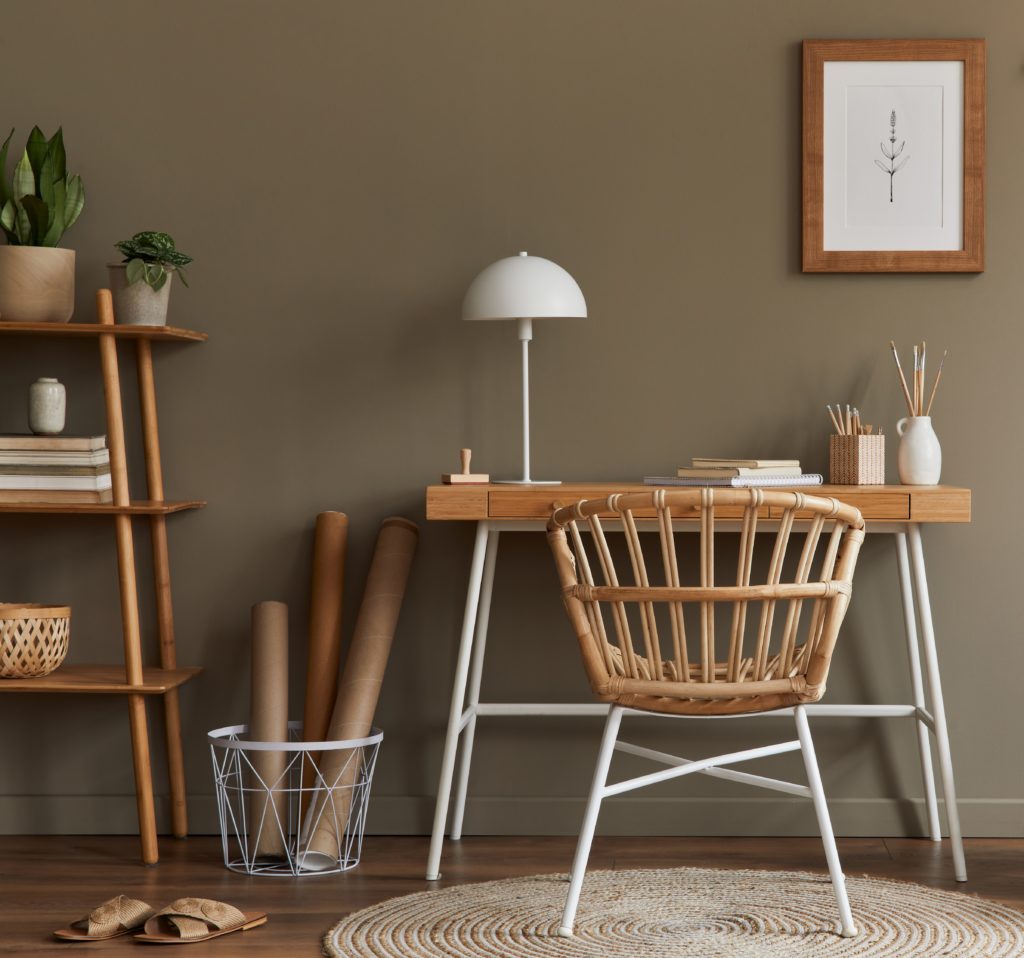
When the need to focus is essential, neutrals create a non-distracting background. Try using warm shades of brown, taupe or sand to keep walls from feeling ho-hum dreary. Professional neutral tones for modern offices, such as soft greiges, warm taupes, and earthy sands, create a polished and calming atmosphere that supports productivity while still feeling welcoming and design-forward.
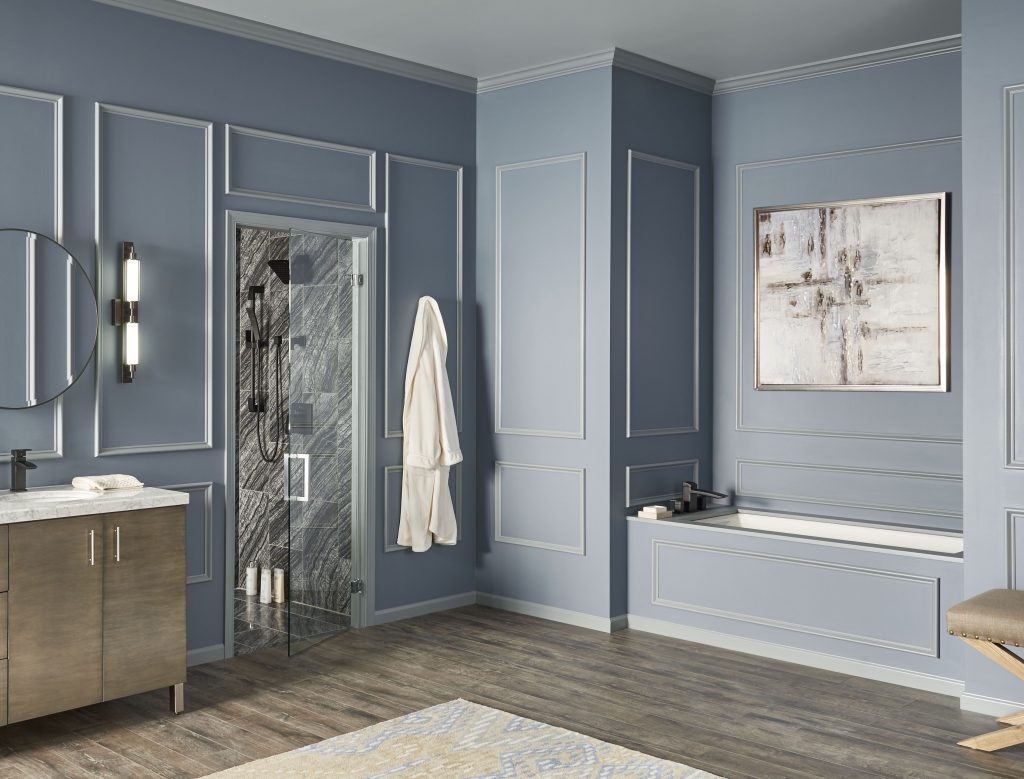
Blue is a tranquil color. Lighter blues have positive associations with clear thinking.
Why is blue considered the best color for focus? Blue tones are known to lower stress levels and promote mental clarity, which makes them ideal for analytical tasks, writing and computer work.
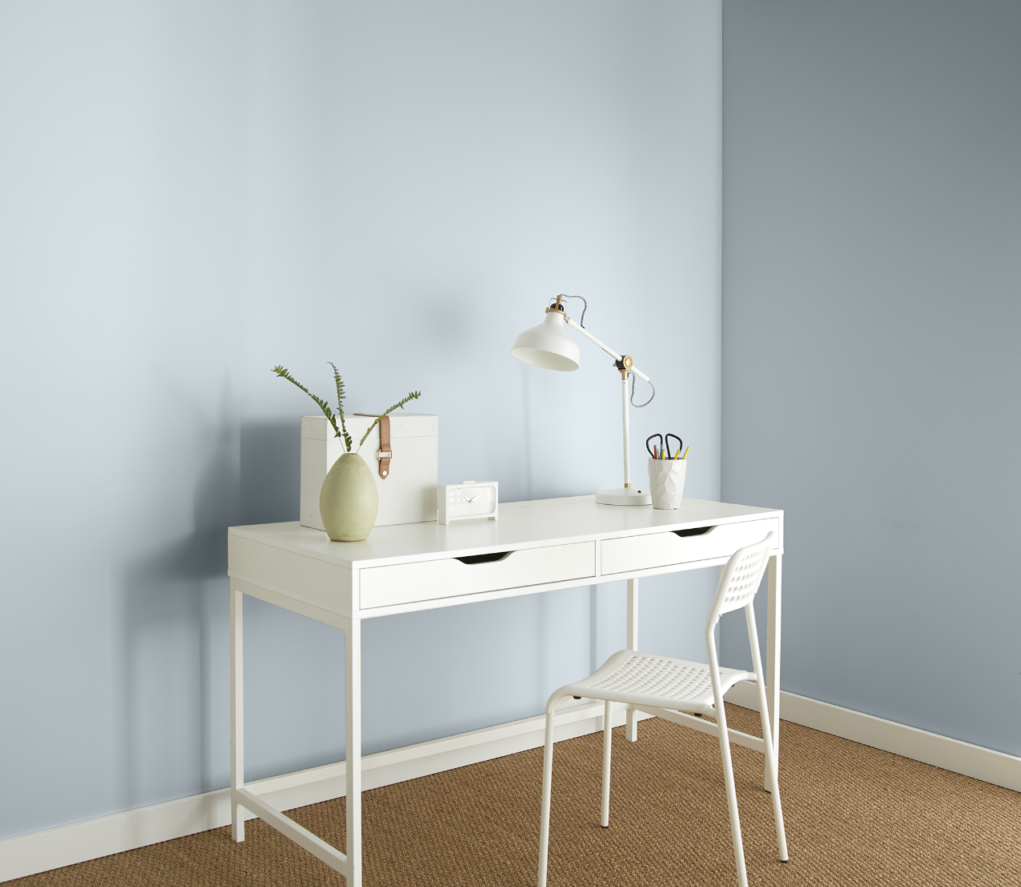
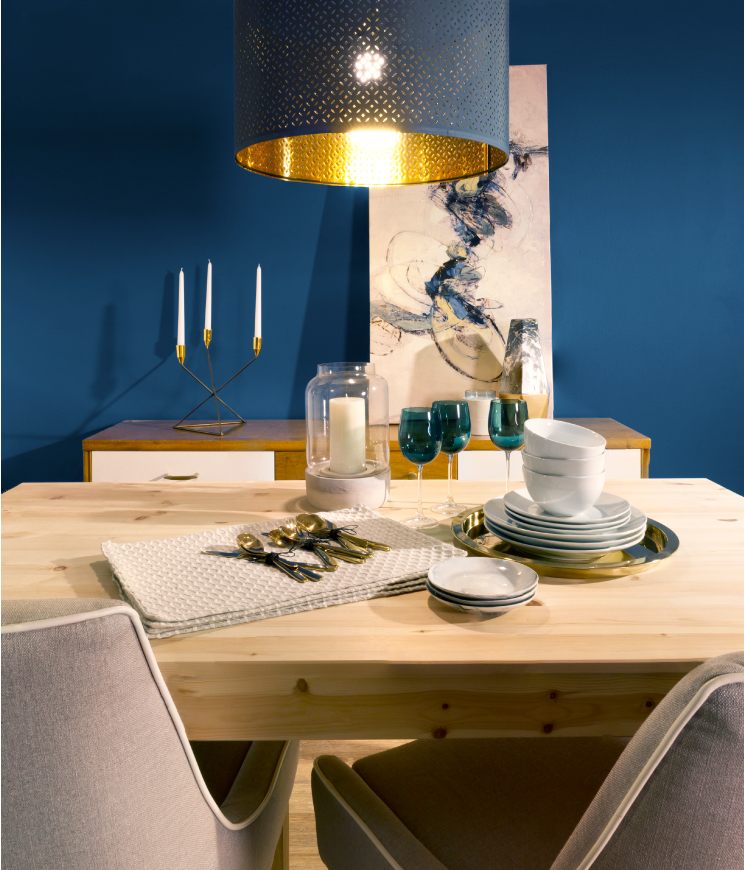
Darker Blues are known for creating an atmosphere of stability.
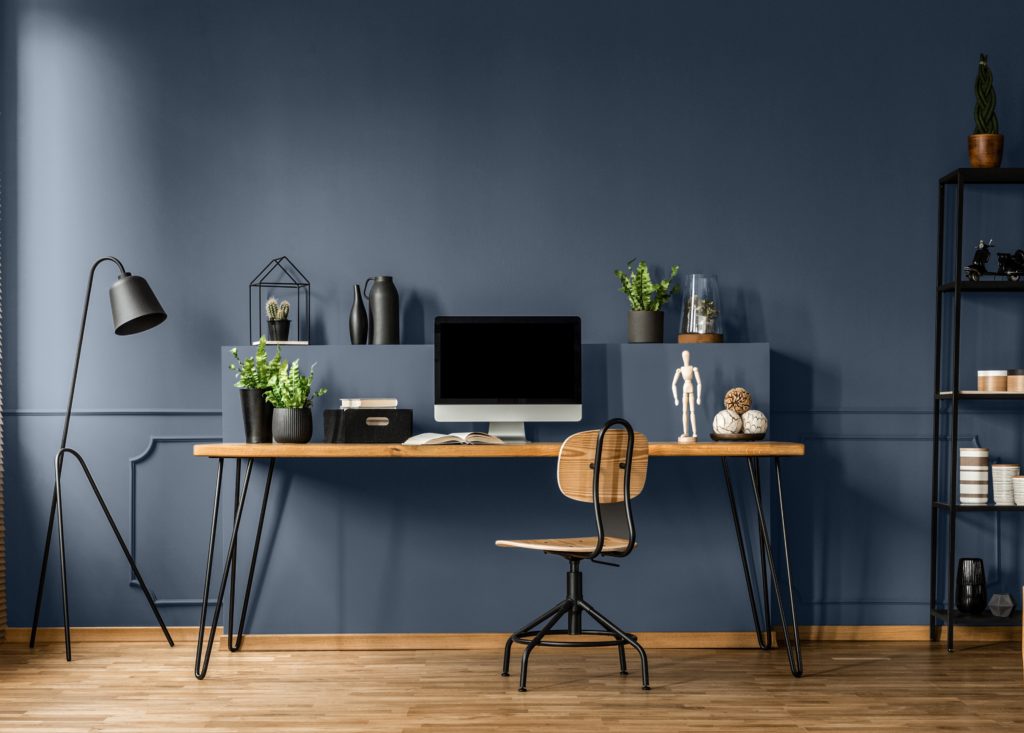
Aqua and turquoise offices have a peaceful balance of blue and green and are easy to live with and helps with focus.
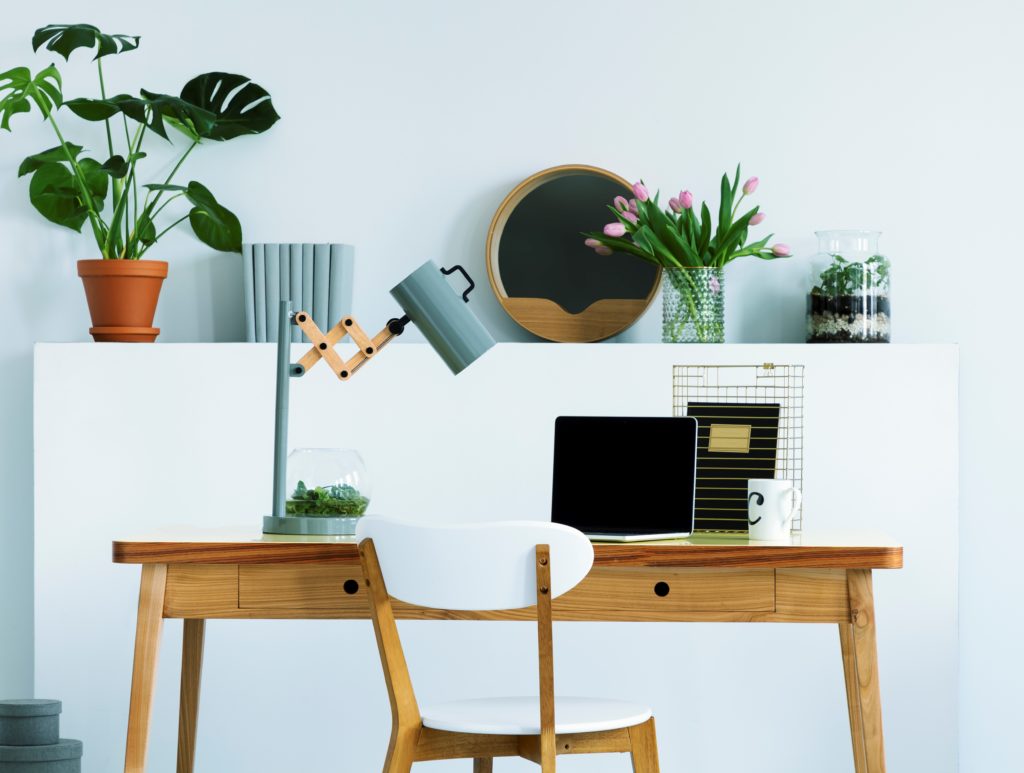
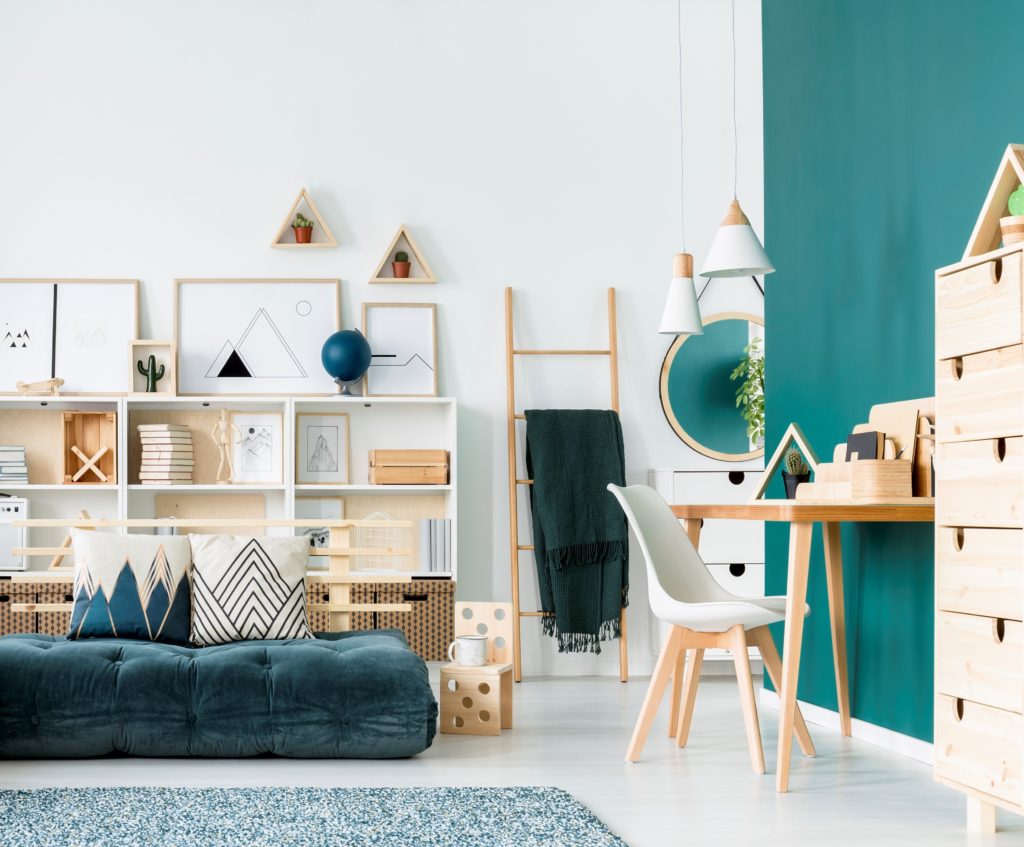
Natural and calming green are great for people working long hours and does not fatigue the eyes.
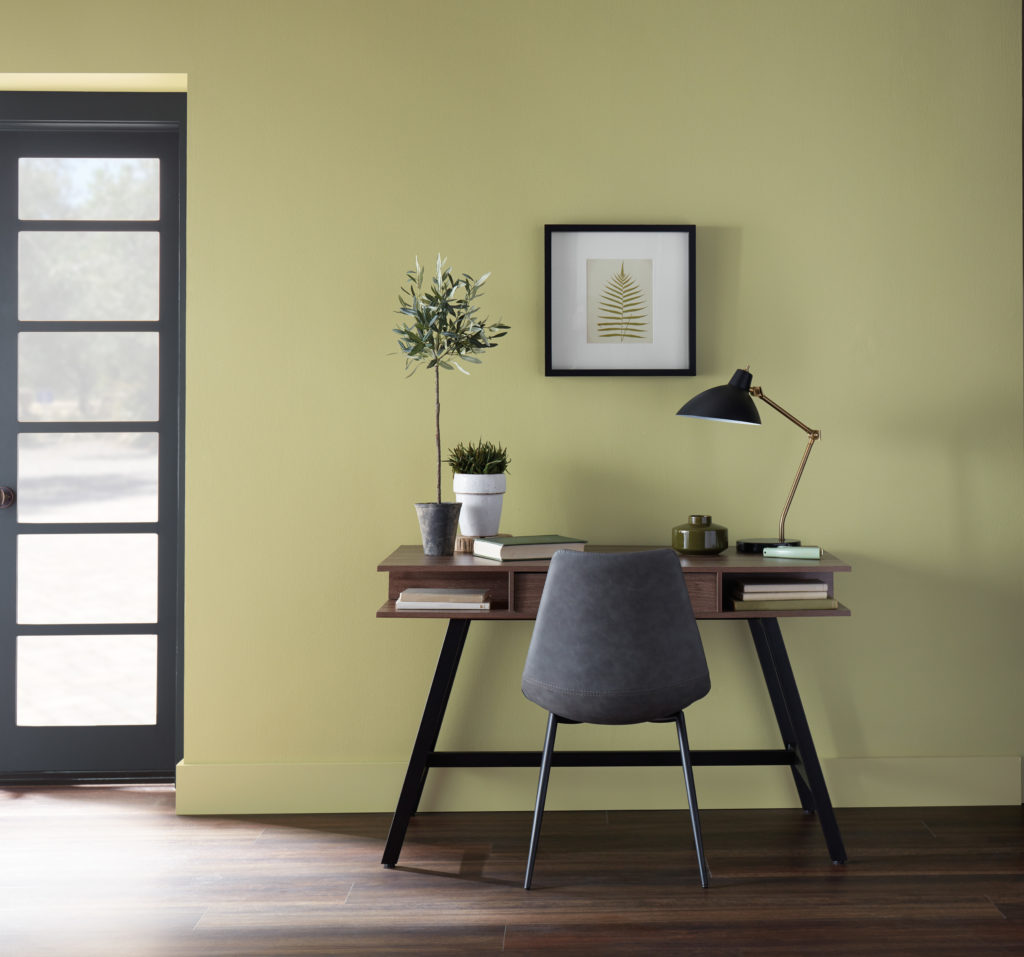
Dark Greens create boldness and balance in where concentration and focus is needed.
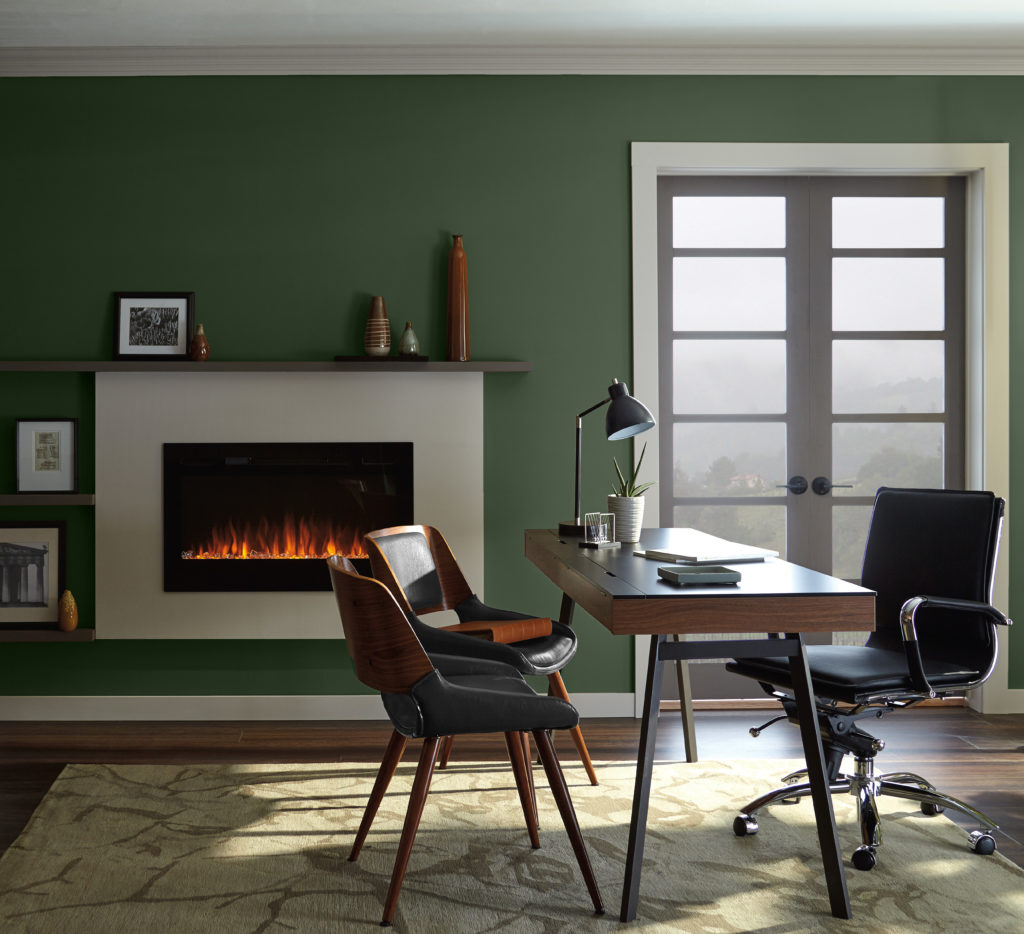
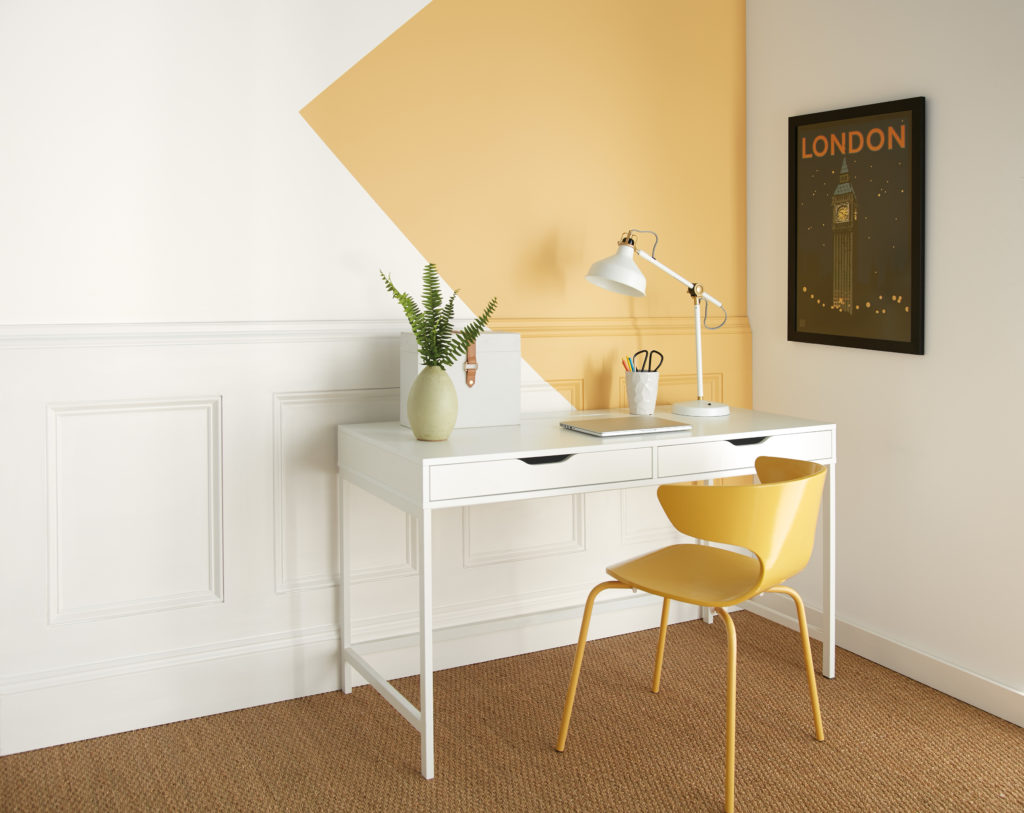
Yellow is associated with optimism and helps stimulate creativity. This is a great color for designers to have in their space.
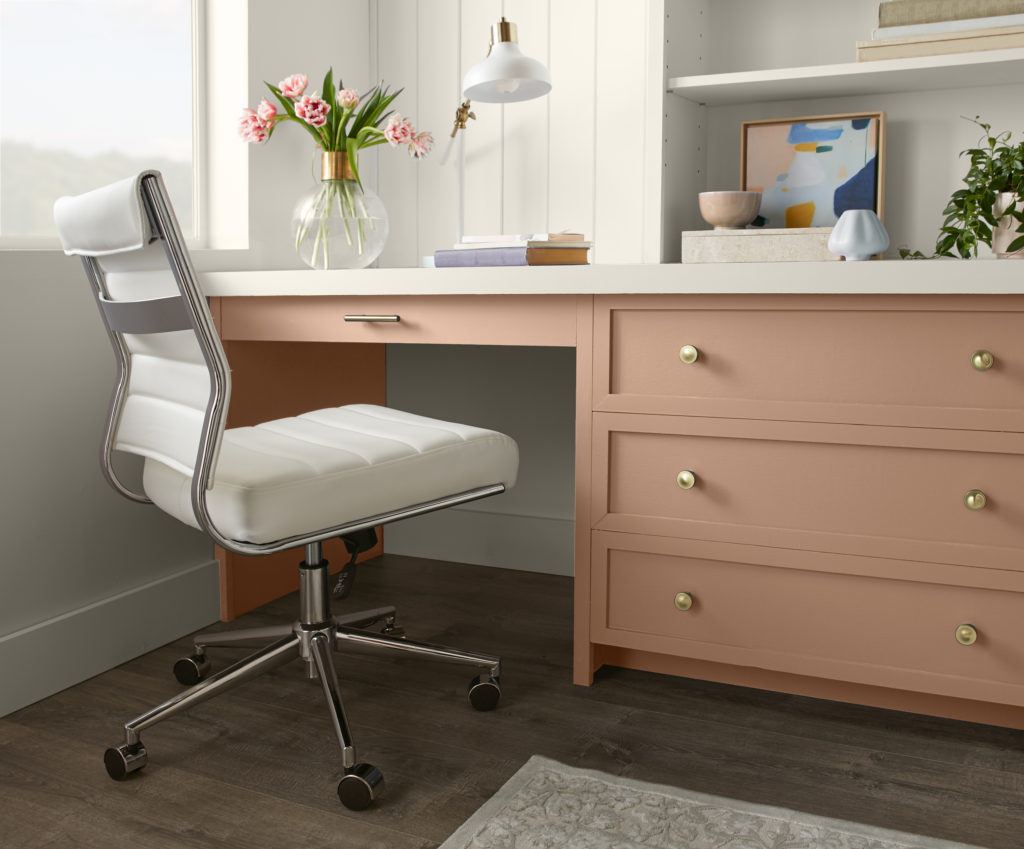
Terra cotta tones provide a sense a warmth to all white space and can suit a variety of home office styles.
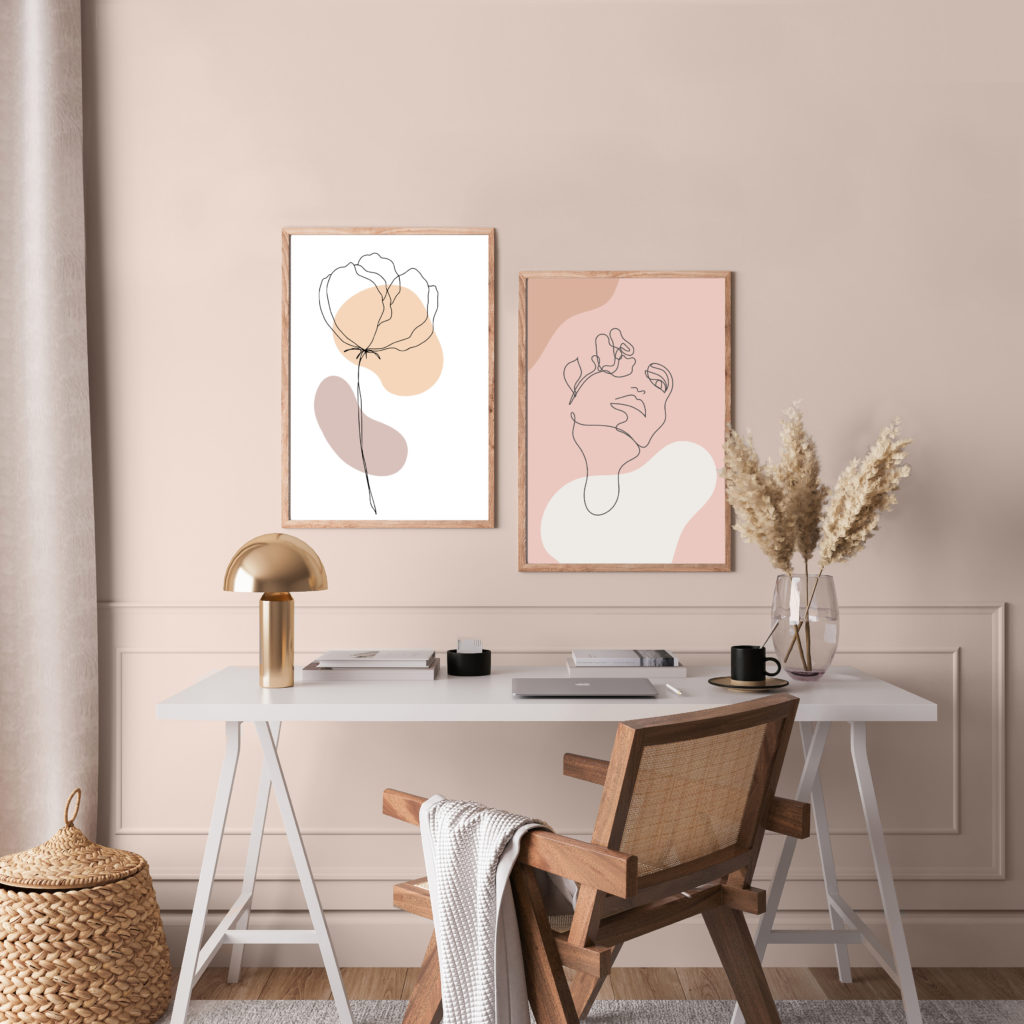
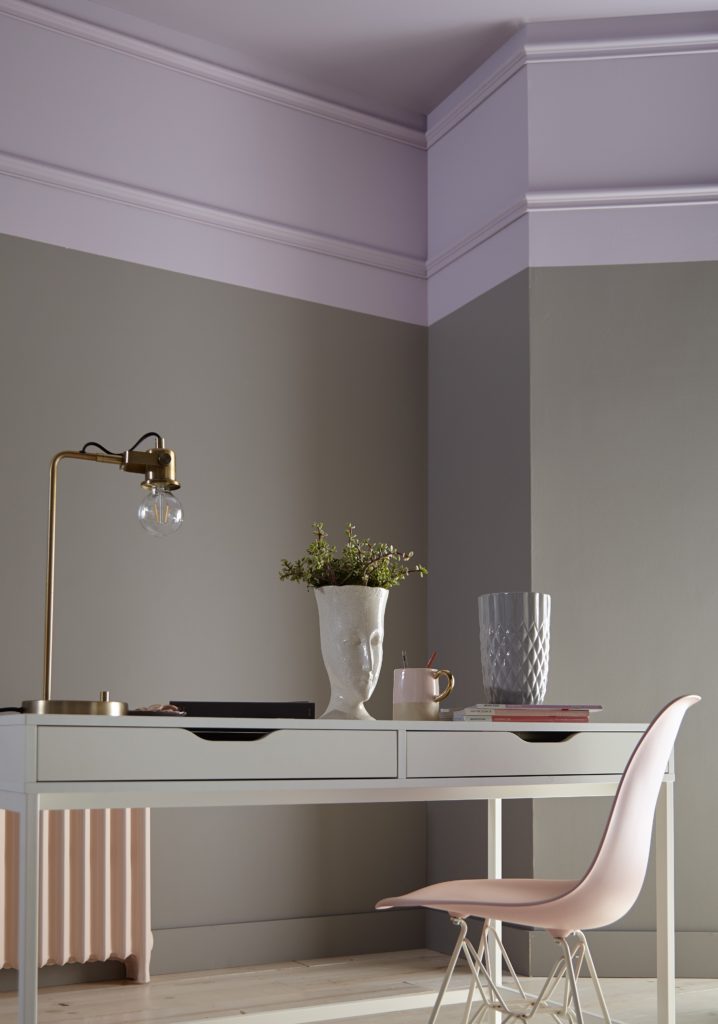
For a room that feels less serious, pink is a color that adds an element of charm and playfulness in an office.
Red is a high energy color – great for rooms where there are lots of conversations or activities taking place.
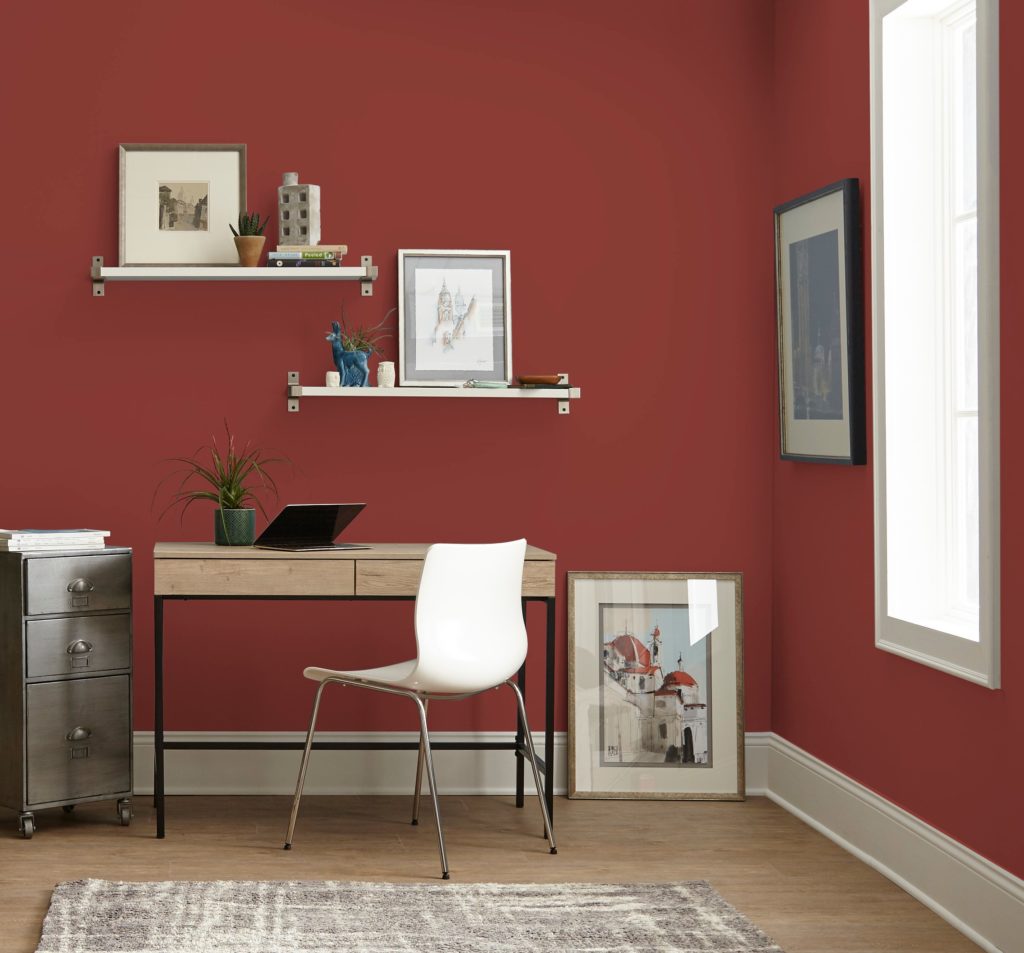
When projects call for out-of-the-box thinking, purple is known to stimulate creativity making it terrific for studios or craft areas.
Lastly, your home office can be professional, but still feel personal. Show off family photos, favorite pieces of art, book collections and make sure your favorite coffee cup is always nearby!
Colorfully yours,
Erika

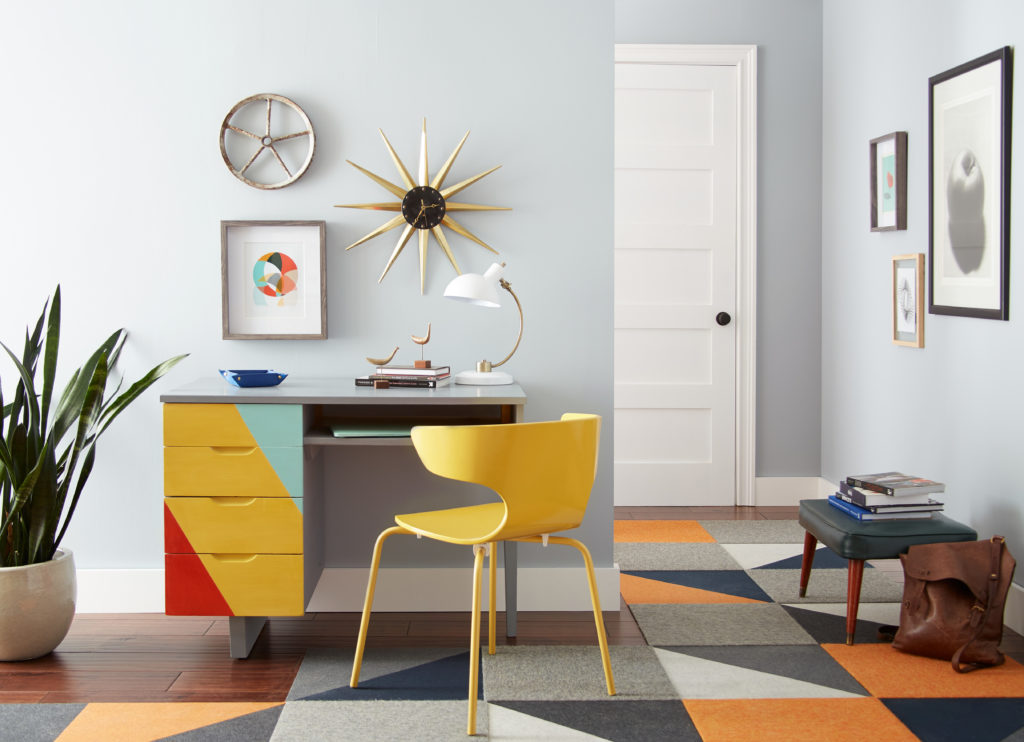
What color paint in the first color top of the page
Hi Gina –
The office featured at the top of this article uses the following paint colors:
Walls: Half Sea Fog (N470-3)
Trim: White (52)
If you like Half Sea Fog, you might also enjoy these popular blue shades:
Offshore Mist (PPU13-16)
Peaceful Blue (S470-3)
English Hollyhock (HDC-CT-16)
Watery (HDC-CT-26)
I hope this helps you find the perfect shade for your space! Let me know if you’d like more recommendations or details on any of these colors.
Colorfully Yours,
Diana